

Life as a Photographer on Social Media: Navigating the Visual World
In the ever-evolving realm of social media, visual content has become the heartbeat of online engagement. As a photographer in 2023, the digital landscape presents both unprecedented opportunities and unique challenges. This blog explores the dynamic journey of being a photographer on social media, discussing the trends, strategies, and the evolving nature of the visual storytelling experience.

The Rise of Visual Storytelling:
In 2023, social media platforms continue to prioritize visual content, solidifying the photographer's role as a visual storyteller. Audiences crave authentic and compelling narratives, pushing photographers to not only capture stunning images but also to curate stories that resonate with their followers. From Instagram's immersive carousel posts to TikTok's short-form storytelling, photographers have diverse mediums to convey their narratives.This being said “Reels” and “shorts” are inherently more visually engaging than text or static images. Reels and shorts leverage this by delivering dynamic, visually appealing content that is more likely to capture and retain viewers' attention.The algorithm tends to favor content that keeps users engaged and spending more time on the platform. As short-form videos like Reels have proven to be effective in capturing user attention, social media platforms may continue to prioritize and promote Reels content.
Diversification of Platforms:
While Instagram remains a powerhouse for visual content, photographers are diversifying their presence across platforms. TikTok's explosive growth and the emergence of new platforms like Clubhouse and Spaces offer unique opportunities for photographers to showcase their work, engage with audiences, and experiment with innovative formats. Being adaptable and exploring different platforms can significantly expand a photographer's reach. on Platforms that prioritize short form video, I personally choose to transform a collection of amazing photographs into a narrated reel or short, displaying a short story or event in a reel of digestible and interesting photo content.

Engagement and Community Building:
In 2023, building a strong online community is more crucial than ever. Social media algorithms prioritize content that sparks meaningful interactions. Photographers are leveraging features like Instagram's Q&A, live sessions, and interactive polls to engage with their audience. Responding to comments and direct messages helps create a sense of connection, turning followers into a supportive community.
Embracing New Technologies:
As technology advances, photographers are incorporating innovative tools and techniques into their work. Augmented reality (AR) filters, virtual reality (VR) experiences, and interactive 3D posts are pushing the boundaries of visual storytelling. Staying abreast of technological trends enables photographers to create cutting-edge content that captivates and amazes their audience. Different styles of portraying Photography and keeping up with current trends like collages, various layouts and overlaying imagery with video are all things to consider when showcasing your images for the most eye catching presentation.
Monetizing Creativity:
Monetization on social media is no longer limited to influencers. Photographers are exploring various revenue streams, such as selling prints, conducting virtual workshops, and partnering with brands. Platforms like Patreon and Ko-fi allow photographers to connect directly with their audience and receive financial support for their creative endeavors. Diversify your portfolio, earning a wage in photography may mean branching out into multiple avenues/ different areas where creative content Is needed. I am primarily a Mountain bike photographer but do Construction and event photography to sustain my main interest which currently does not pay as much as the side jobs.

Navigating the Challenges:
While the opportunities are vast, photographers also face challenges on social media. Algorithm changes, saturation in certain niches, and the constant need for originality can be daunting. Building a personal brand, staying true to one's unique style, and adapting to the evolving landscape are essential strategies to overcome these hurdles.
The Social Responsibility of Visual Storytelling:
Photographers now recognize the impact of their work beyond aesthetics. Social and environmental issues are gaining prominence in visual storytelling. Many photographers are using their platforms to raise awareness, advocate for change, and contribute to positive social impact.

Being a photographer on social media in 2023 is an exhilarating journey filled with creative opportunities and challenges. Navigating this dynamic landscape requires adaptability, innovation, and a genuine connection with the audience. As technology continues to evolve, so does the role of the photographer in shaping the visual narrative of our digital age. Embrace the changes, tell your story, and let your creativity shine in this ever-evolving visual landscape.

Best Hikes in Pemberton: Exploring the North Sea to Sky
My personal Favorite hikes in the Pemberton, BC area rated Hard to easy
Pemberton is a small community located in the Pemberton Valley in the province of British Columbia, Canada. It is situated approximately 135 km (84 miles) north of Vancouver and about 32 km (20 miles) north of Whistler. Pemberton is surrounded by stunning mountains, including Mount Currie, and is home to several lakes and rivers, including the Lillooet River and One Mile Lake. The area is known for its natural beauty and outdoor recreation opportunities. Perhaps an area less commonly hiked that Whistler or Squamish, Pemberton and the surrounding area is full of some stunning, wild landscapes and areas definitely worth checking out, here are a list of a few personal favorites and places to consider when planning your next hike!
MT.Currie (Hard)


Mount Currie is a prominent mountain located in the Pemberton Valley of British Columbia, Canada. It's a popular destination for hiking enthusiasts, offering stunning views of the surrounding landscapes. The hike up Mount Currie is a challenging one (maybe the hardest on the list) and it's important to be well-prepared before attempting it as no fresh water is available on the hike requiring tabs or filters for drinking
The trailhead for the hike is located on the east side of the Pemberton Valley, off of Highway 99 at the turning for the green river motocross track. The trail is approximately 20.3km out and back and gains around 1,350 meters of elevation. It's recommended that hikers allow 1-2 days to complete the hike (depending on if heading to the campsite or too the summit), and that they have proper footwear, clothing, overnight gear and supplies.
The hike itself is steep and strenuous, with much of the trail being through dense forest. There are a few sections of rock scrambling towards the top, and the final ascent is a quite steep talus field, having you navigate large boulders and rocks. However, once hikers reach the summit, they'll be rewarded with incredible views of the Pemberton Valley and surrounding mountains, on a good day you can even see Mt.Baker in the distance
It's important to note that this is a backcountry hike, and hikers should be prepared for changing weather conditions and potential hazards such as loose rocks and steep drop-offs. It's recommended that hikers bring plenty of water, food, and warm clothing, and that they tell someone their planned route and expected return time before setting out.
Tenquille Lake (Hard)

The Tenquille Lake hike is a less commonly hiked located in the Pemberton area of British Columbia, Canada. The hike takes you through beautiful alpine meadows, past streams and waterfalls, and ends at the stunning Tenquille Lake. The trail is approximately 20.9km round trip and is rated as moderate to difficult due to the elevation gain of 1586m
The trailhead for the hike is located on the Lillooet Forest service road about a 25 minute drive from Pemberton in the Pemberton meadows (50.502880, -122.967720). The trail begins with a gradual incline through a forested area, before opening up to beautiful meadows with views of surrounding mountains. As you continue up the trail, you will pass several streams and waterfalls before reaching the lake.
The lake is a beautiful turquoise color and is surrounded by snow-capped peaks. There is a camping area at the lake, so many people choose to stay overnight and explore the area further.
Be Aware that this is Grizzly bear habitat, bear spray is highly advised and Hiking with caution is a must, its also worth mentioning that dogs are not allowed on this trail so leave pup at home.
Joffre Lakes (moderate)
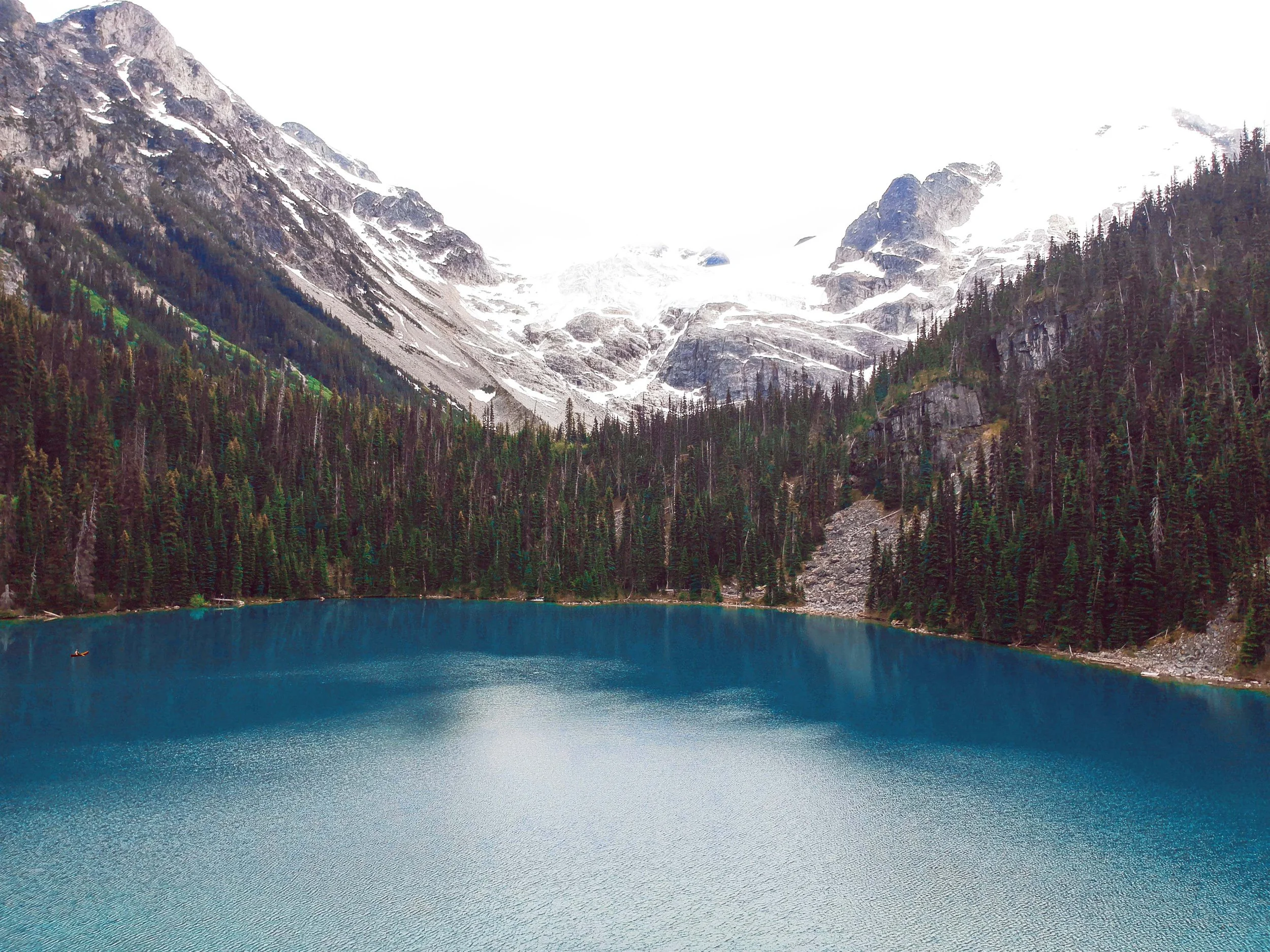


The Joffre Lakes hike is a popular hiking trail located near Pemberton, British Columbia, Canada. The trail offers stunning views of 3 turquoise blue glacial lakes and surrounding mountains, making it a must-do in the Pemberton area but you must reserve a free day-use permit before arriving at BC parks (Discovercamping.ca)
The trailhead for the Joffre Lakes hike is located approximately 35 kilometers east of Pemberton on Highway 99. The trail is approximately 7.5 kilometers long roundtrip and gains around 491 meters of elevation. The hike is rated as moderate difficulty and is suitable for most hikers, including families with children.
The trail starts in dense forest and gradually climbs towards the first lake, Lower Joffre Lake. The lake is a beautiful shade of blue and offers great photo opportunities. The trail then continues towards Middle Joffre Lake and Upper Joffre Lake, each with their own unique features and stunning views of ridges, glaciers and forest
It's recommended that hikers allow around 4-5 hours to complete the hike, and that they have proper footwear, clothing, and supplies. Hikers should also be aware that the trail can be quite busy during peak season, so it's best to arrive early in the day to avoid crowds.
It's important to note that the Joffre Lakes hike is in a backcountry area and hikers should be prepared for changing weather conditions and potential hazards such as slippery rocks and steep drop-offs. It's recommended that hikers bring plenty of water, food, and warm clothing, and that they tell someone their planned route and expected return time before setting out. If not intending to do this hike in peak summer season it is advisable also to consider snow spikes as a little bit of snow/ice can remain on the trail for a significant duration of early season hiking, it will make it easier to come down (on your feet rather than backside). No dogs allowed since 2018
Semaphore Lakes (Moderate)


Semaphore Lakes is a beautiful alpine destination located in the South Chilcotin Mountains Provincial Park. The park is known for its stunning alpine scenery, glacier-fed lakes, and rugged mountain terrain.
The trailhead for the Semaphore Lakes hike is located at the end of Gun Creek Road, approximately 22 kilometers west of Gold Bridge or from Pemberton head up the Hurley FSR until the 14KM mark and park at the pullout on the left. (50.590510,-123.017770)
The hike is approximately 6 kilometers roundtrip and gains around 400m meters of elevation, making it a moderately difficult hike. The trail offers beautiful views of the surrounding mountains and valleys.
The hike starts in dense forest and gradually climbs towards the first lake, Semaphore Lake. The lake is a beautiful turquoise color and offers stunning views of the surrounding peaks. The trail then continues towards the second lake, known as the upper lake, which is even more picturesque than the first.
It's recommended that hikers allow around 3-4 hours to complete the hike, and that they have proper footwear, clothing, and supplies. The area is remote and there are no facilities, so hikers should bring plenty of water, food, and warm clothing. Hikers should also be aware that the trail can be quite rocky and steep in places, so caution should be exercised.
It's important to note that the South Chilcotin Mountains Provincial Park is a wilderness area, and hikers should be prepared for changing weather conditions and potential hazards such as wildlife encounters and sudden storms. It's recommended that hikers bring a map and compass, and that they tell someone their planned route and expected return time before setting out. No dogs allowed
One Mile Lake (Easy)

One Mile Lake is a popular recreational area located in the Pemberton Valley of British Columbia, Canada. The lake is approximately one mile (1.6 km) in length and is surrounded by a beautiful walking trail, picnic areas, and a beach area for swimming.
The lake is a popular spot for swimming and paddling during the summer months. There are also several fishing opportunities available on the lake, with species such as rainbow trout and kokanee salmon found in the water.
The walking trail around the lake provides stunning views of the surrounding mountains and the lake itself. The trail is flat and well-maintained with a boardwalk section allowing access through the marshland, making it a great option for all skill levels. Along the trail, there are several benches and picnic tables where visitors can stop and enjoy the scenery.
The lake is located just off Highway 99 as you enter Pemberton from the South (Whistler) with ample parking on site, Dogs allowed and toilet facilities.
Mosquito Lake and Mt Currie Viewpoint (EASY)

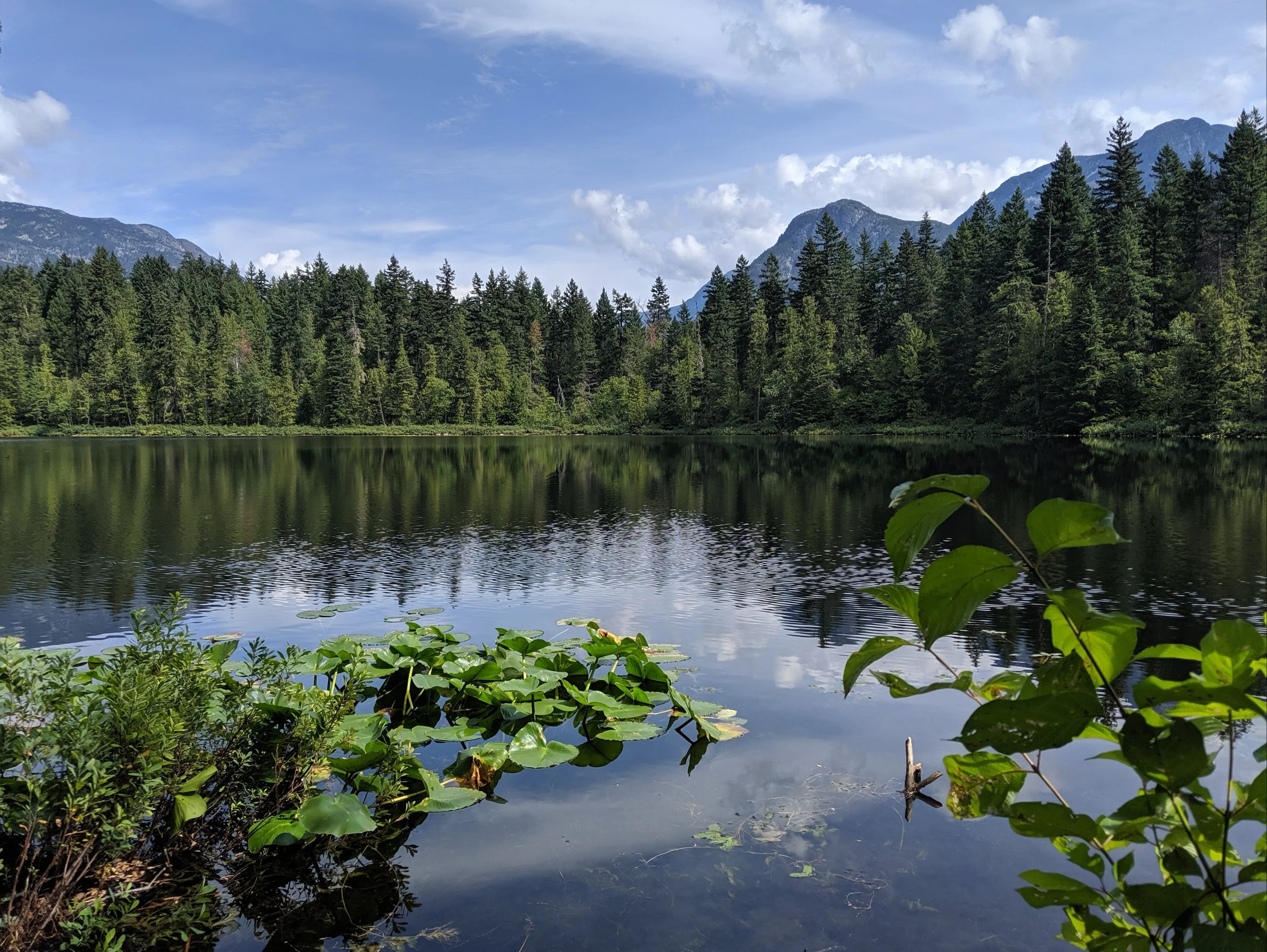
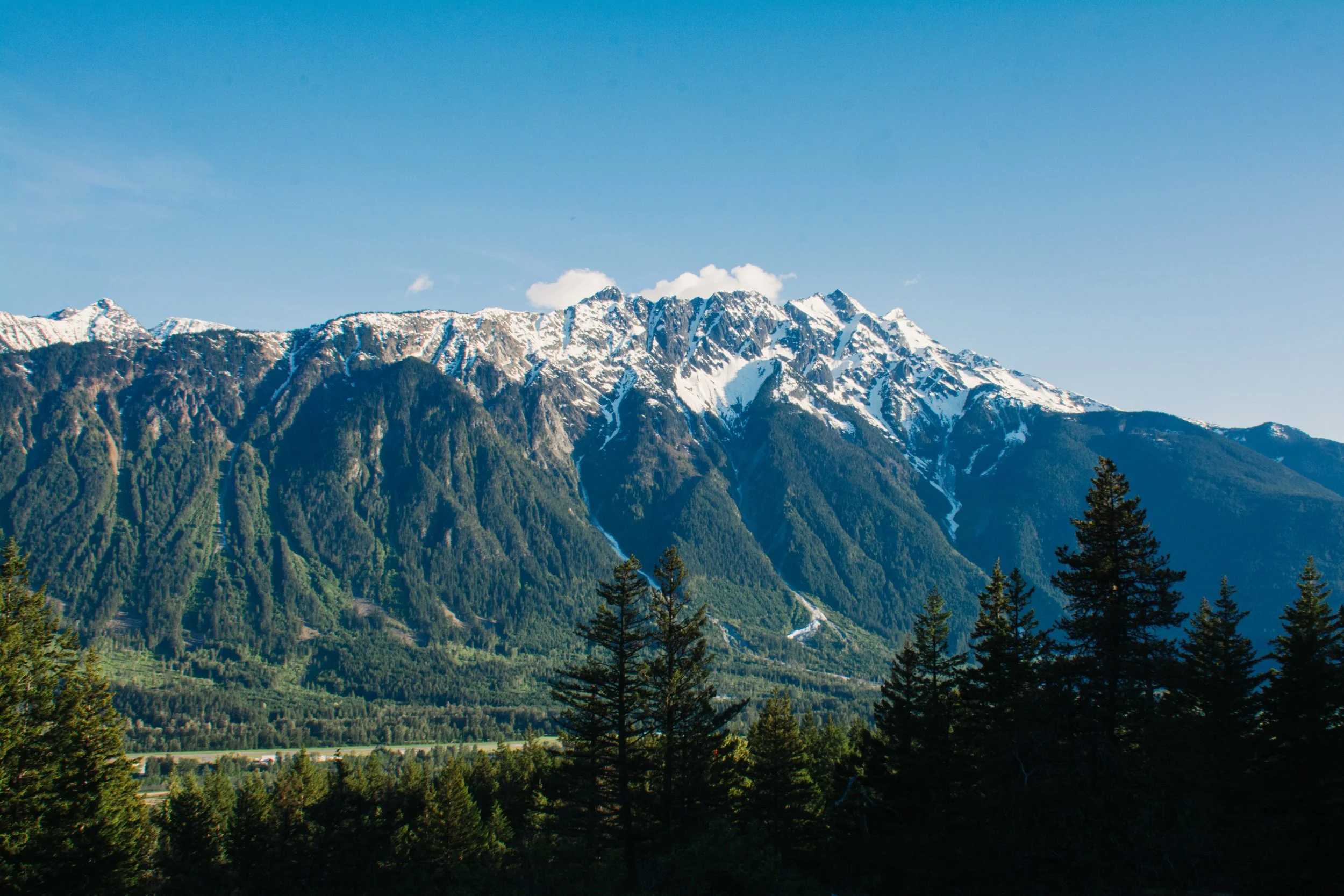

To access Mosquito lake, head toward Owl creek just north of Mt Currie east of Pemberton along highway, turn off at Reid road and take the first left turning onto linda Rd parking right by the lake!
The lake is a great spot for fishing stocked with rainbow trout and kokanee salmon, making it a popular spot for fishing. Visitors can also swim in the lake, although it is important to note that there is no designated beach area., swimming, and other water-based activities, and is surrounded by beautiful forested areas.
There are several hiking trails that can be accessed from the Mosquito Lake area, including the trail to a fantastic Mt Currie lookout, which offers stunning views of the surrounding mountains and the valley below.
Be aware that the lookout is on a Mountain bike shared trail called (Creampuff) so always remain vigilant when heading to the spot and show respect to any riders using the trails aswell.
(5.33037 N, 122.73906 W)
Please note that some of these hikes may require permits or have limited access due to seasonal closures or weather conditions. Always check local conditions and regulations before heading out on any hike. Additionally, it is important to be prepared with proper gear and supplies, as well as to practice Leave No Trace principles to help preserve the natural beauty of the area.

Sony A7 IV Action Photography tips: The Complete Guide
The Ins and outs of what settings, features and tips/tricks you might need to take some great action photography.
This complete guide breaks down everything you need for nailing fast-paced shots with your Sony A7 IV. Want to skip ahead? Click any section below to jump straight to it:

capturing Fast moving Action sports with the Sony A7 IV and the features it offers is both fun and effective
Choosing the Right Lens:
Selecting the right lens is paramount in action photography as it profoundly influences the outcome of your shots. The lens you choose dictates the perspective, depth of field, and light-gathering capabilities, all of which are critical elements when capturing fast-paced moments. In action photography, where subjects are often in rapid motion, choosing a lens with a wide aperture is particularly crucial. A fast prime lens or a zoom lens with a wide aperture, such as the Sony FE 24-70mm f/2.8 GM or Sony FE 70-200mm f/2.8 GM OSS, allows more light to enter the camera, enabling faster shutter speeds. This is essential for freezing the motion of subjects, resulting in sharp and detailed images. Moreover, the focal length of the lens determines the composition and framing of your shots, providing the flexibility to zoom in on distant subjects or capture a broader view of the action. Therefore, investing time in selecting the right lens ensures that your camera is optimally equipped to handle the challenges posed by dynamic and fast-moving scenes, ultimately elevating the quality of your action photography.
Setting Up Auto Focus (AF):

Setting up autofocus (AF) correctly is pivotal for successful action photography, and the Sony A7 IV offers various options to cater to different shooting scenarios. The camera provides different AF modes, but for capturing dynamic movement, Continuous AF (AF-C) is the go-to choice. This mode continuously adjusts focus to track and follow your subject as it moves within the frame. Real-time Tracking is another invaluable feature, utilizing artificial intelligence to identify and maintain focus on your chosen subject, even if it momentarily moves out of the selected AF point. For more precise control, the AF Area settings allow you to customize the focus point, ensuring it aligns perfectly with your composition. Additionally, Manual Focus can be beneficial when shooting action involving scenarios where the camera will struggle to find a subject (Dark or challenging environments or subjects not standing out against the background) Set up the Camera to pre focus on where your subject intends to be for the desired photo and have a tripod to keep it steady, This is a great option to guarantee you don’t miss the shot! The versatility of these autofocus options empowers photographers to adapt to diverse action scenarios and ensures that their subjects remain consistently in focus throughout the dynamic moments they aim to capture.
Customizing Buttons and Function Menu:
Tailor your camera’s controls to fit your shooting style by assigning frequently used features to the customizable buttons and the Function (Fn) menu. The Sony A7 IV offers extensive customization, allowing you to map a wide range of functions to nearly every button on the body — including the C1–C4 buttons, AF-ON, AEL, joystick center press, and even the wheel and dials.
You can assign quick access to critical settings like ISO, white balance, focus modes, Eye AF toggle, APS-C crop mode, zebra display, or even subject recognition settings — all without diving into the main menu. This kind of setup is especially useful in action photography, where response time matters.
To customize buttons:
Go to Menu > Setup > Operation Customize > Custom Key/Dial Set.
Choose between Still, Video, or Playback mode (customization is mode-dependent).
Select the button or dial you want to customize, then assign a new function from the list.
For the Function (Fn) Menu:
Go to Menu > Setup > Operation Customize > Function Menu Set.
You can configure up to 12 functions (6 on top, 6 on bottom) for quick access when you press the Fn button during shooting.
Customizing your controls means you can adjust key settings on the fly — often without taking your eye off the EVF. It streamlines your workflow and lets you react faster to changing shooting conditions, which is critical for tracking fast-moving subjects.
Optimizing Shutter Speed:
Optimizing shutter speed is a critical aspect of action photography, directly influencing how motion is captured in your images. The Sony A7 IV provides photographers with various ways to manipulate shutter speed to achieve desired effects and maintain sharpness in fast-paced scenarios.
Freezing Action with High Shutter Speeds:
When photographing fast-moving subjects like athletes or wildlife, using a high shutter speed is essential to freeze the action. Shutter speeds of 1/500s or faster are often necessary to capture crisp and clear images without motion blur. High-speed Continuous Shooting mode can be employed to capture a sequence of shots, ensuring you catch the decisive moment.
Motion Blur with Slow Shutter Speeds:
Conversely, intentionally using slow shutter speeds can convey a sense of motion and dynamism in your images. This technique is effective when photographing subjects like flowing water or moving vehicles. A slower shutter speed, such as 1/30s or even slower, can create a deliberate blur, adding a dynamic and artistic element to your shots.
Panning for Dynamic Shots:
Panning involves tracking a moving subject with your camera while using a slower shutter speed. This technique allows the subject to remain relatively sharp while the background blurs, emphasizing a sense of speed and movement. Experiment with shutter speeds around 1/30s to 1/60s and practice smooth, controlled camera movements for optimal results.
Adapting to Available Light:
In challenging lighting conditions, adjusting your shutter speed becomes crucial. When shooting in low-light situations, you may need to use slower shutter speeds, necessitating the use of a tripod to prevent camera shake. Conversely, in bright conditions, you can utilize faster shutter speeds to control exposure and prevent overexposure.
Shutter Priority (S) Mode for Control:
To have direct control over shutter speed, use the Shutter Priority (S) mode on your camera. This mode allows you to set the desired shutter speed while the camera automatically adjusts the aperture for proper exposure. It is particularly useful when you want to prioritize specific motion-related effects in your shots.
Balancing Shutter Speed with Aperture and ISO:
Achieving the ideal exposure involves balancing shutter speed with aperture and ISO settings. A wider aperture (lower f-number) allows more light to enter the lens, enabling faster shutter speeds. However, this also affects depth of field. Balancing these settings ensures that you maintain the right exposure while controlling motion.
Utilizing Burst Mode:

Bursting at High + with a slow shutter speed to give the image a dynamic feel
Burst mode on the Sony A7 IV is a game-changer for action photographers seeking to capture the perfect moment in a dynamic sequence. Burst mode, often referred to as Continuous Shooting (Hi), allows the camera to capture a rapid series of images with a single press and hold of the shutter button. This feature is especially advantageous when photographing fast-paced subjects like athletes, wildlife, or any scenario with unpredictable movement. The A7 IV's burst mode, with its impressive frames-per-second rate, ensures that you don't miss critical moments, enabling you to select the optimal frame from a sequence of shots. This burst capability is superior to single-shot mode, where timing is more challenging, and the risk of missing the decisive moment is higher. Burst mode not only increases the likelihood of capturing the perfect action shot but also provides more options for selecting the frame with the ideal composition, expression, or peak moment of motion. It offers a level of flexibility and precision that sets it apart, making it an indispensable tool for action photographers.
White Balance and Picture Profiles:
White balance and picture profiles play crucial roles in shaping the visual aesthetics and color accuracy of your photographs, especially in action photography with the Sony A7 IV. White balance refers to the camera's adjustment of colors to reproduce a neutral white under different lighting conditions. When shooting action in varied environments, selecting the appropriate white balance preset or manually setting the color temperature ensures accurate and realistic color representation. The A7 IV provides presets like daylight, cloudy, tungsten, and more, but it also allows custom white balance adjustments to fine-tune colors based on the specific lighting conditions. In addition to white balance, picture profiles on the Sony A7 IV offer a creative toolset to enhance or modify the overall look of your images. Experimenting with different profiles, such as Standard, Vivid, or Neutral, can dramatically impact contrast, saturation, and sharpness.
Metering and Exposure Compensation:
Choose a metering mode that suits your scene, Additionally, use exposure compensation to fine-tune exposure in challenging lighting situations, ensuring your subjects are properly exposed even in fast-paced scenarios
Multi Metering:
Measures the balance of light over the entire screen for normal shooting. Multi-segment metering is particularly effective in scenes with even and consistent lighting, where you want the camera to consider various elements across the entire frame. This metering mode is versatile and well-suited for a wide range of shooting situations, providing a reliable and automated way to achieve well-exposed images without the need for manual adjustments.
Center Metering:
Measures the light with emphasis placed on the centre area of the screen. In this mode, the camera assigns greater importance to the brightness values in the center of the composition, while still considering the surrounding areas to a lesser extent. This makes Center-weighted metering well-suited for scenarios where the primary subject is centrally located, such as portraits or situations where the key element is in the middle of the frame. Center-weighted metering is particularly useful when you want to prioritize the exposure of the central subject without being heavily influenced by the brightness or darkness of the background.
Spot Metering:
Measures the Brightness in the chosen size of spot Circle. This mode is particularly useful when precise control over exposure is required for a specific subject or area in the scene. When using spot metering, the camera calculates the exposure based solely on the brightness values within the designated spot, ignoring the surrounding areas. This is advantageous in situations where there is a significant difference in brightness between the subject and the background, such as a backlit subject or a scene with strong contrasts. Photographers can use spot metering to ensure that a specific element in the frame receives the correct exposure, allowing for creative control over the overall tonal balance of the image.
Entire Screen avg:
Measures the average brightness of the entire screen. This mode measures the average brightness of the entire screen ensuring stable exposure even if the composition or the position of the subject changes.
Highlight:
Measures the brightness concentrating on the highlighted area of the screen. A mode optimal for shooting scenes with reduced over exposure. This mode measures brightness while emphasising the highlighted area on the screen. Many professionals use highlight metering to save bright areas such as skies and snow, which have a tendency to get ‘blown’ or overexposed, without data loss or additional re-touching in post.

Monitoring Action with the Viewfinder:
The Sony A7 IV's high-resolution EVF provides a real-time and detailed preview of the scene, allowing photographers to maintain an uninterrupted connection with their subject. Unlike an optical viewfinder, the EVF displays exposure settings, focusing points, and other critical information directly in the viewfinder, eliminating the need to divert attention to the camera's LCD screen. This feature proves invaluable when capturing fast-paced moments, as it enables precise framing, composition, and focus adjustments without taking one's eye off the action.The ability to review images in the EVF immediately after capture aids in quickly assessing the success of a shot and making necessary adjustments on the fly.
Post-Processing Workflow:
Engaging in a meticulous post-processing workflow is a crucial step in optimizing and refining your images, and it brings a myriad of benefits to your overall photography. The Sony A7 IV, with its high-resolution sensor and advanced features, captures a wealth of data in each shot. Post-processing allows you to unlock the full potential of this data, fine-tuning aspects such as exposure, contrast, color balance, and sharpness. Software tools like Adobe Lightroom or Capture One provide a comprehensive platform for organizing, editing, and enhancing your images. Benefits include the ability to correct exposure discrepancies, mitigate issues related to challenging lighting conditions, and accentuate specific details or colors to match your artistic vision. Moreover, post-processing allows for creative expression, enabling you to experiment with different styles, filters, and tonal adjustments to convey the mood or narrative you envision. It's a dynamic and iterative process that empowers photographers to refine their work, correct any imperfections, and ultimately deliver polished, professional-quality images for showcase. Whether it's subtle enhancements or transformative edits, post-processing is an indispensable tool for elevating your photography to the next level.

Freezing the action, off camera flash, capturing the moment!