
Best Cameras for Action Sports Photography in 2026
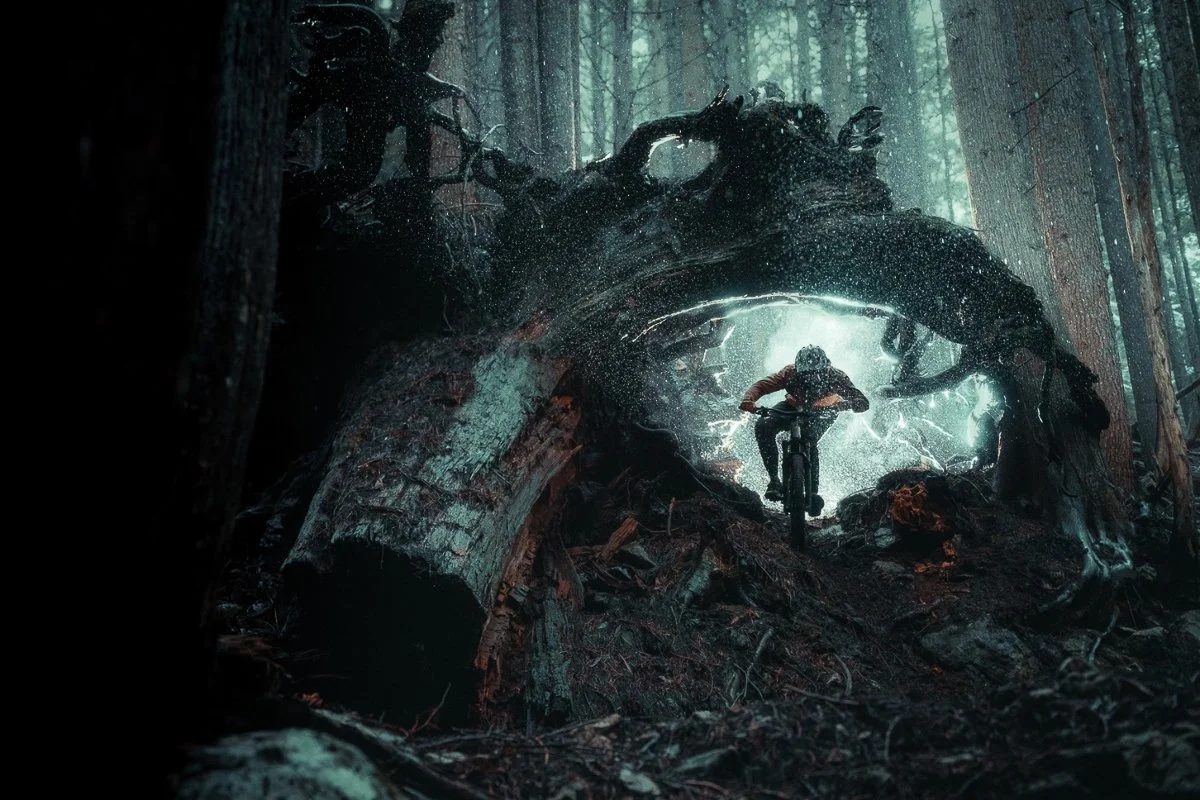
With years of experience photographing MTB riders and various high energy action sports on demanding trails, race events, and big-mountain features across the Sea to Sky region, Canada. I understand the importance of reliable gear that delivers sharp focus on moving subjects, handles unpredictable conditions, and provides the speed needed to capture decisive moments. My previous Sony A7IV review continues to be one of the most viewed posts on my site, as it offered practical insights for gear decisions. This guide builds on that with an overview of standout models available in 2026, selected for their performance in action environments like mountain biking, motocross, skateboarding, and similar disciplines.
Mirrorless cameras remain the preferred choice due to their rapid electronic viewfinders, compact design, and advanced autofocus systems. Key priorities for action sports include high burst rates with tracking, predictive autofocus, extensive weather sealing, large buffers, and effective stabilization.
Essential Features for Action Sports Cameras
Burst Shooting: At least 20 fps with continuous autofocus and exposure metering to capture sequences of motion.
Autofocus Performance: AI-enhanced subject detection, including people, vehicles, and predictive algorithms for erratic paths.
Buffer and Readout Speed: Deep buffers and fast sensor readout to reduce rolling shutter effects during panning or rapid movement.
Durability: Full weather sealing and rugged construction for dust, moisture, and impacts.
Resolution and Handling: Balanced megapixels for cropping flexibility without sacrificing speed.
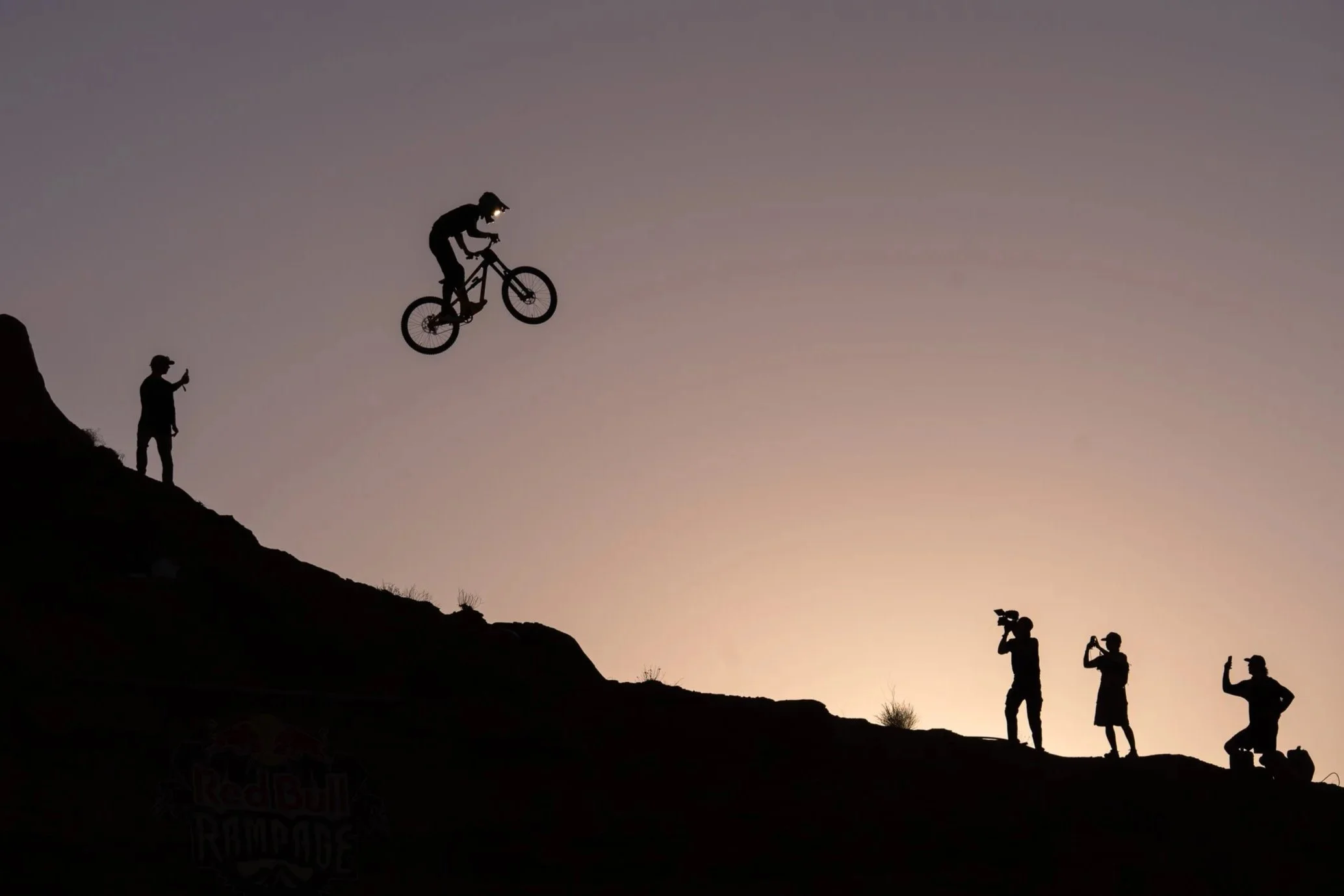
Top Camera Recommendations for 2026
Canon EOS R5 Mark II – Best Overall for Versatility and Resolution
My primary camera for recent mountain bike projects. The 45-megapixel back-illuminated stacked sensor enables up to 30 fps electronic shutter bursts and 12fps mechanical shutter, with full autofocus and auto-exposure tracking, while significantly reducing rolling shutter distortion compared to previous models. Canon's Dual Pixel Intelligent AF includes Action Priority mode, which uses deep learning to anticipate and prioritize key moments in supported sports—particularly useful for tracking riders through features. Eye Control AF has been refined for faster and more accurate focus point selection by gaze. Additional features like pre-continuous shooting (buffering frames before full shutter press) and in-body stabilization up to 8.5 stops enhance handheld telephoto work.
Strengths: Outstanding autofocus intelligence, high resolution for detailed crops, 8K video for hybrid use, and robust build.
Drawbacks: Premium pricing; potential thermal limits during prolonged video (minimal impact on stills). Ideal for: Advanced photographers needing detail and speed for sideline or trail-side shooting.
Nikon Z8 – Excellent Balance of Performance and Value
A consistent performer that remains highly relevant in 2026. Its 45-megapixel stacked sensor supports 20 fps RAW bursts (higher in cropped modes) advertised up to 60 fps or even 120 fps (for smaller JPEG/RAW). with Nikon's reliable 3D Tracking autofocus, which excels at maintaining lock on fast-moving subjects like downhill riders. The deep buffer and fully weather-sealed body provide confidence during extended sessions in variable conditions.
Strengths: Strong price-to-performance ratio, silent electronic shutter, exceptional ergonomics, and compatibility with a wide range of telephoto lenses.
Drawbacks: Slightly larger body than some ultra-compact options. Ideal for: Photographers seeking professional-grade speed and reliability without the highest cost.
Sony A1 II – Flagship Speed and Subject Detection
Sony's updated flagship incorporates a dedicated AI processing unit for enhanced subject recognition, with a 50-megapixel stacked sensor delivering 30 fps blackout-free shooting (The original rumor about 120 fps bursts relates to certain modes or partial frame outputs — the practical top for full-resolution stills with tracking is 30 fps). Improvements include faster eye detection (30-50% quicker than the original A1), pre-capture buffering, and refined vehicle/people tracking that translates well to bikes and riders. The compact body and superior electronic viewfinder make it highly portable for dynamic action.
Strengths: Unmatched readout speed for minimal distortion, comprehensive subject detection modes, and hybrid photo/video capabilities.
Drawbacks: Higher price point. Ideal for: Professionals requiring the fastest response and advanced AI tools.
Canon EOS R1 – Ultimate Professional Reliability
Engineered for the most extreme sports environments, the 24-megapixel stacked sensor prioritizes speed with up to 40 fps bursts and pre-continuous shooting. Action Priority AF predicts subject movement with high accuracy, supported by cross-type phase detection for improved vertical/horizontal sensitivity. The body is exceptionally durable, with advanced weather sealing suited to harsh conditions.
Strengths: Unrivaled burst depth and reliability, superior low-light performance, and in-camera upscaling options. Drawbacks: Lower resolution restricts extreme cropping compared to higher-megapixel alternatives. Ideal for: Event photographers covering races or high-intensity action in challenging settings.
Insta360 X5 – Premier 360-Degree POV and Creative Tool
Distinct from traditional mirrorless systems, the Insta360 X5 stands out for immersive POV capture in action sports. Dual lenses record full 8K 360° video, allowing complete scene coverage and post-production reframing for ideal compositions—including third-person views via the invisible selfie stick effect. Larger 1/1.28" sensors improve low-light performance with AI noise reduction, while replaceable lenses, enhanced stabilization, and waterproofing to 15m (49ft) without a case add durability for helmet, chest, or bike mounts. Battery life supports extended sessions up to 3 hours.
Strengths: Eliminates framing concerns during intense action, vast creative reframing options, rugged design, and seamless integration as a secondary camera.
Drawbacks: Video-centric with lower stills resolution for large prints; best used alongside a primary mirrorless body. Ideal for: Capturing dynamic first- or third-person perspectives on technical trails or features.
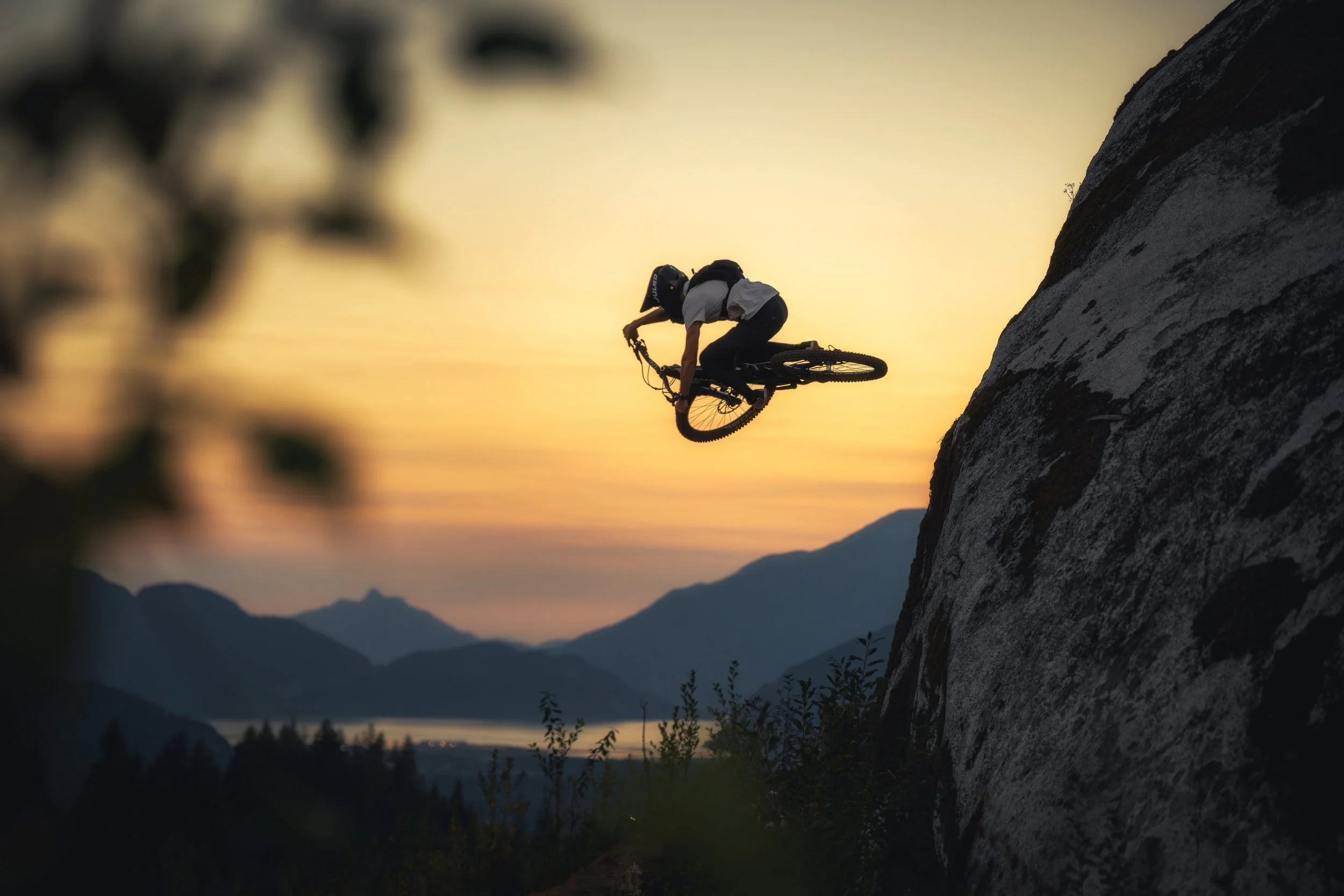
Practical Shooting Tips
Use shutter speeds of 1/1000s or higher to freeze motion, combined with continuous high-speed burst modes.
Activate subject detection and predictive tracking for unpredictable rider paths.
Pair with fast telephoto lenses (e.g., 70-200mm f/2.8 or 100-400mm) for reach and isolation.
Employ zone or expanded AF areas for chaotic scenes, and pre-focus on known features when possible.
In summary, selecting the ideal camera depends on your specific needs, budget, and existing lens collection. These 2026 models represent the current pinnacle for action sports, offering tools that significantly improve capture rates in demanding scenarios. If you're evaluating an upgrade and seek advice tailored to mountain biking or British Columbia conditions, please comment below or contact me directly.
Visit my portfolio for examples shot using comparable gear, and I look forward to helping capture your next adventure.
Best regards,