
How to Shoot Action Sports Photography Like a Pro: Camera Settings, Gear, and the Shots That Go Viral
Action sports photography is one of the most demanding and rewarding niches in the industry. Whether you're chasing mountain bikers through the forest, tracking surfers from the shore, or dodging dust at a motocross event, the rules are the same: you've got one shot, one moment, and no second chances. After years of shooting everything from Crankworx to Red Bull Rampage to backcountry MTB in the Sea to Sky corridor, here's what I've learned about making images that actually stop people mid-scroll.

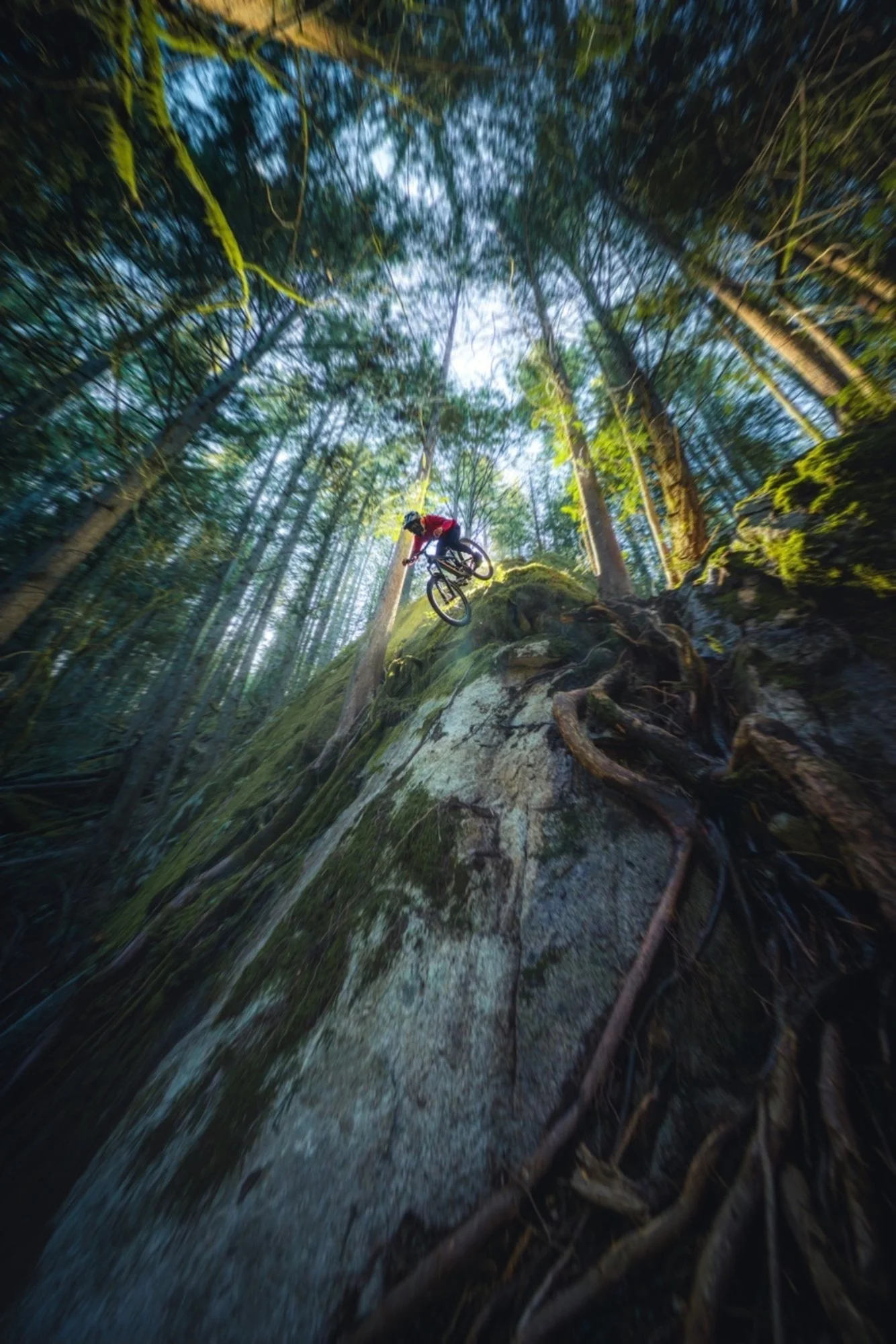

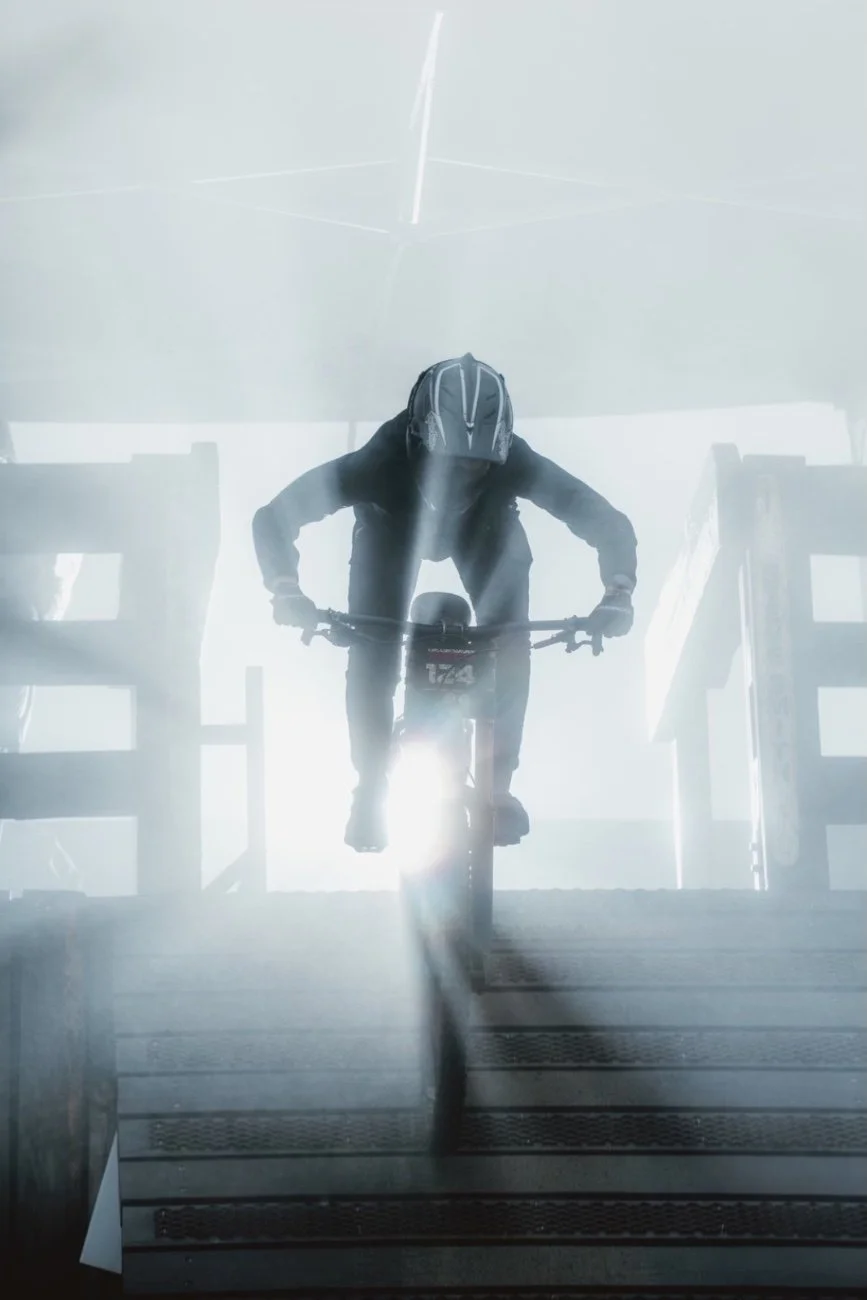
Camera Settings: The Foundation of Every Great Action Shot
This comes down to understanding your exposure triangle (shutter speed, aperture, and ISO) and knowing how to prioritize them for moving subjects. There are also two fundamentally different approaches to freezing action, and understanding both will open up a lot of creative options.
Shutter Speed is your most critical variable when shooting with natural or ambient light. To freeze fast action cleanly, I rarely shoot below 1/1250s. On a bright day at Rampage or a Crankworx slopestyle event, I'll push to 1/2000s or higher. For mountain biking in the trees where light drops fast, I'll occasionally dip to 1/1000s, but anything slower starts showing motion blur on the rider. Sometimes that's intentional, most of the time it's not.
Flash freezing is the other approach, and it's one I use regularly, especially in low light or when I want a specific, punchy look. The key principle is that when you fire a flash, it's the duration of the flash burst that freezes your subject, not your shutter speed. A typical speedlight or strobe fires at somewhere between 1/1000s and 1/20,000s, which stops motion cold. This means you can shoot at your camera's sync speed (usually 1/250s) and still get a razor-sharp subject because the flash is doing the freezing work. The result is a dark or controlled background with your subject lit cleanly and crisply, a look that immediately separates an image from standard ambient-light shooting. I've used this approach on trail shoots where the forest light is flat and unflattering and the flash completely transforms the image. High-Speed Sync (HSS) lets you push past sync speed if you need a brighter ambient exposure, though you'll sacrifice some flash power in the process.
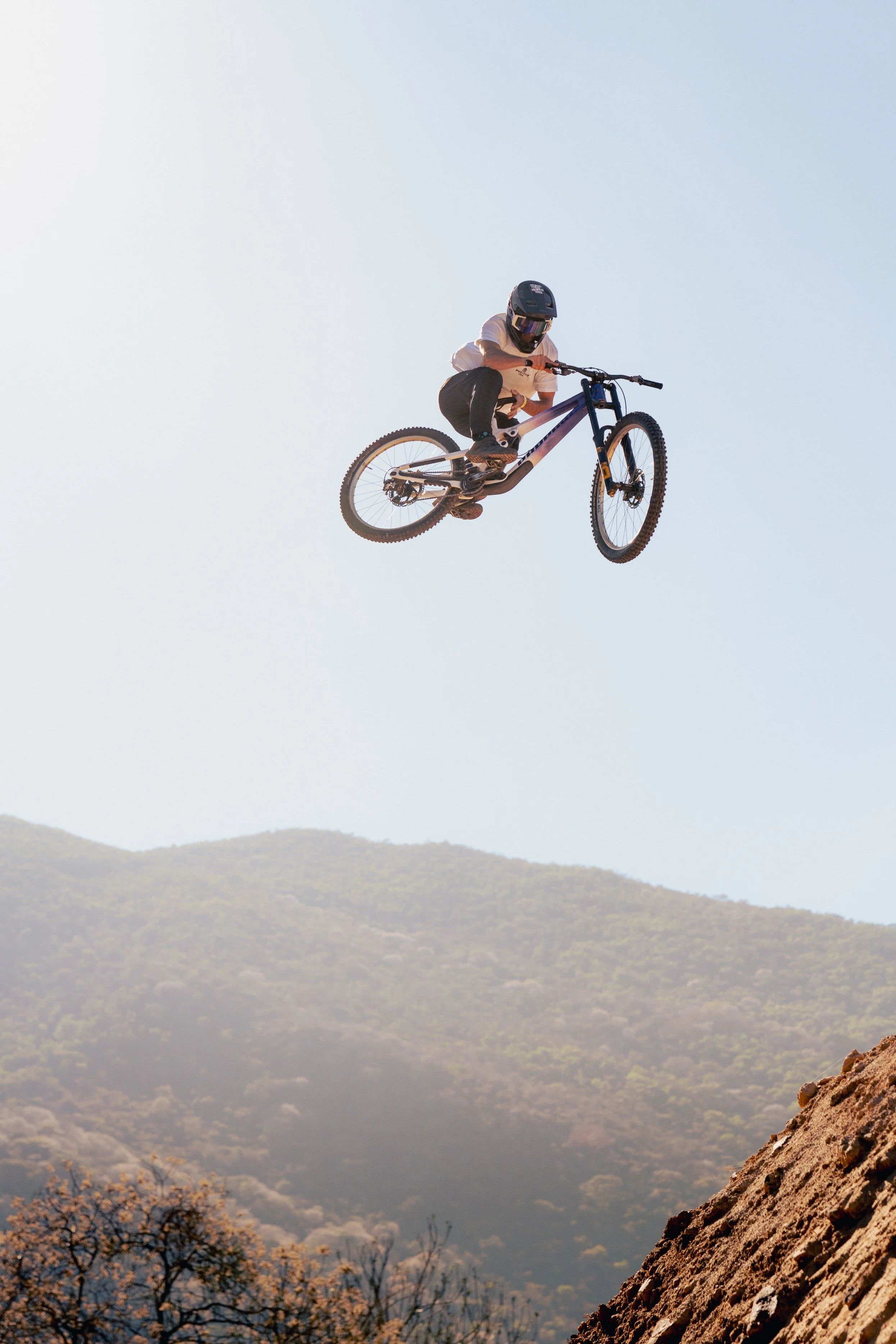
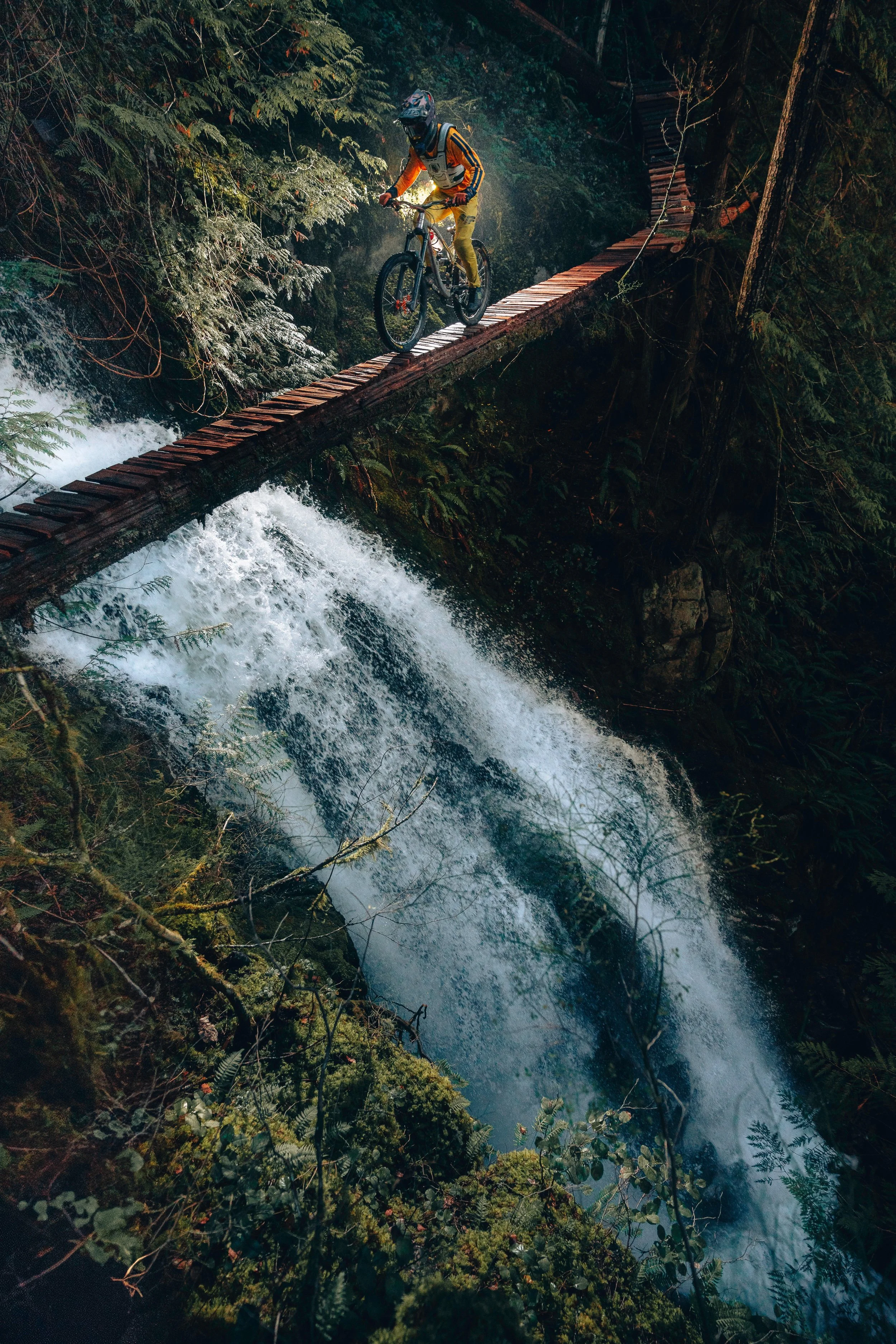
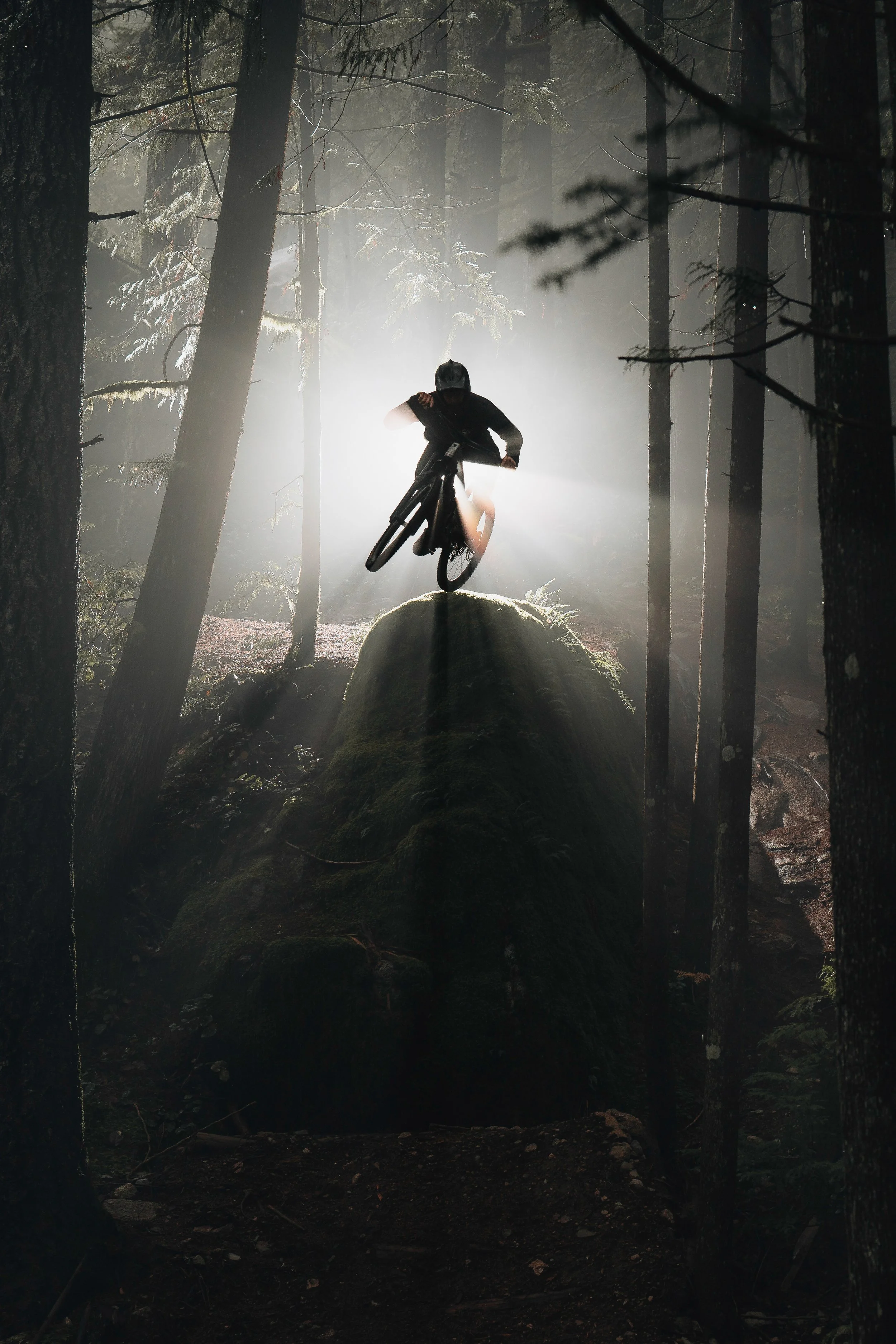
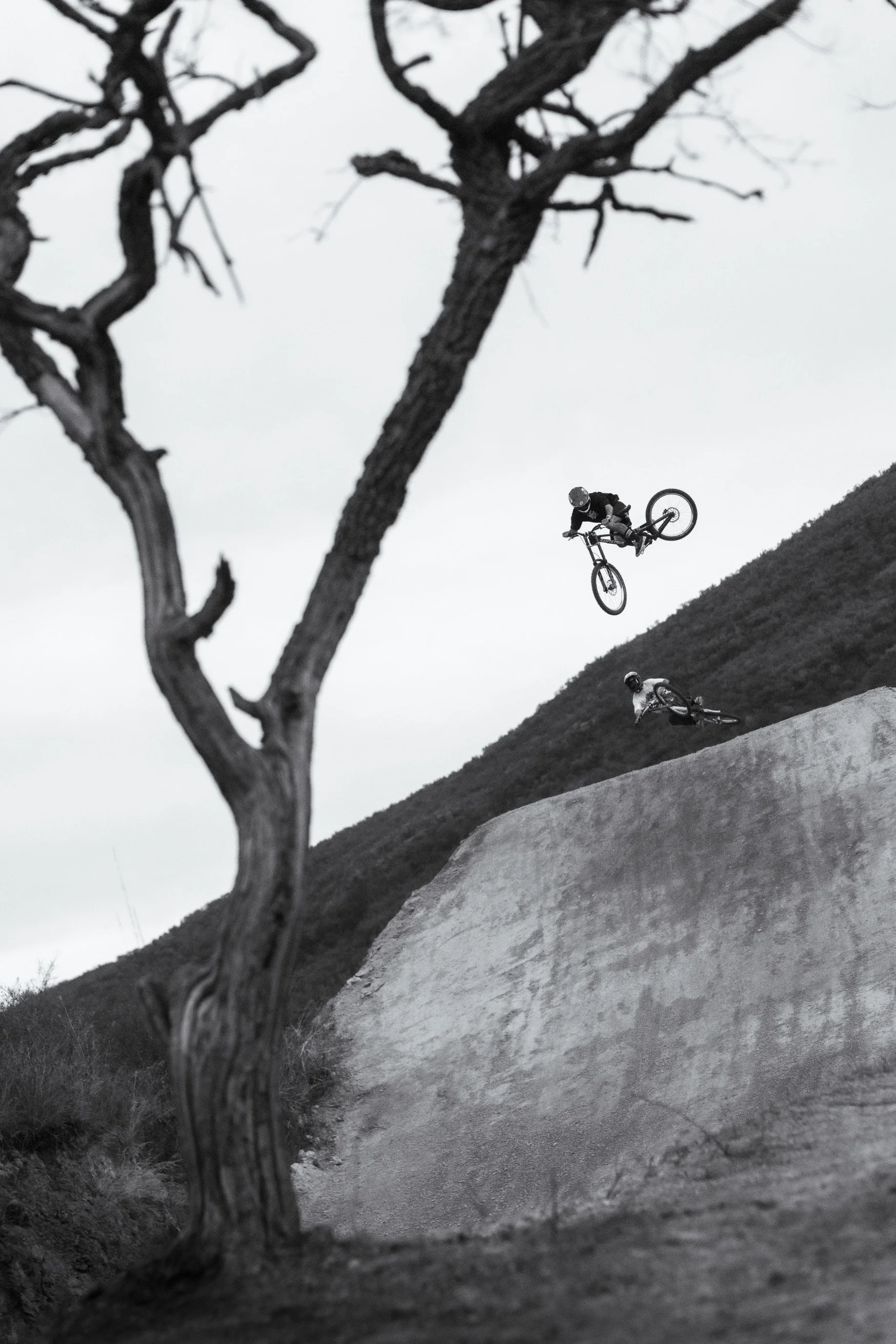
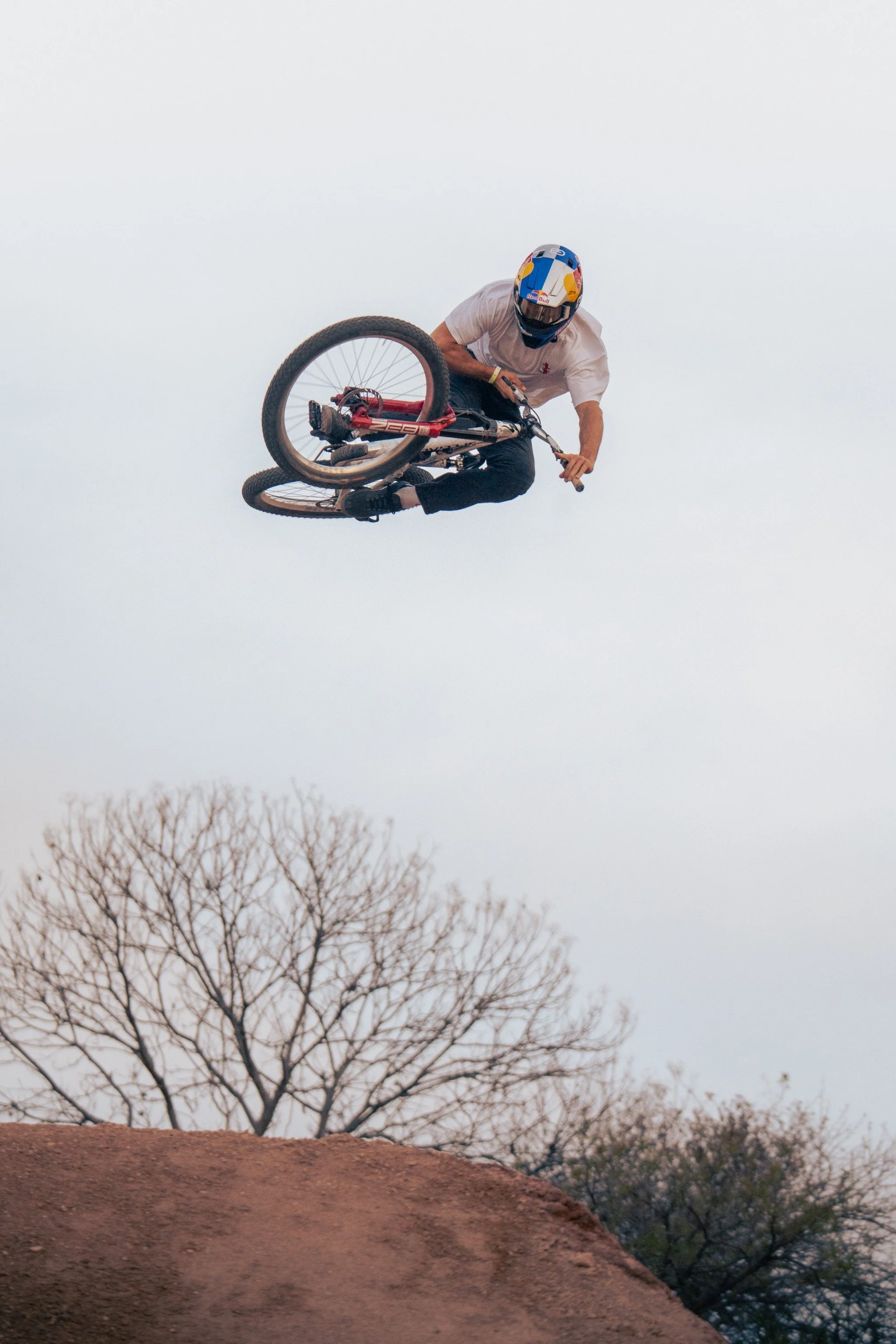
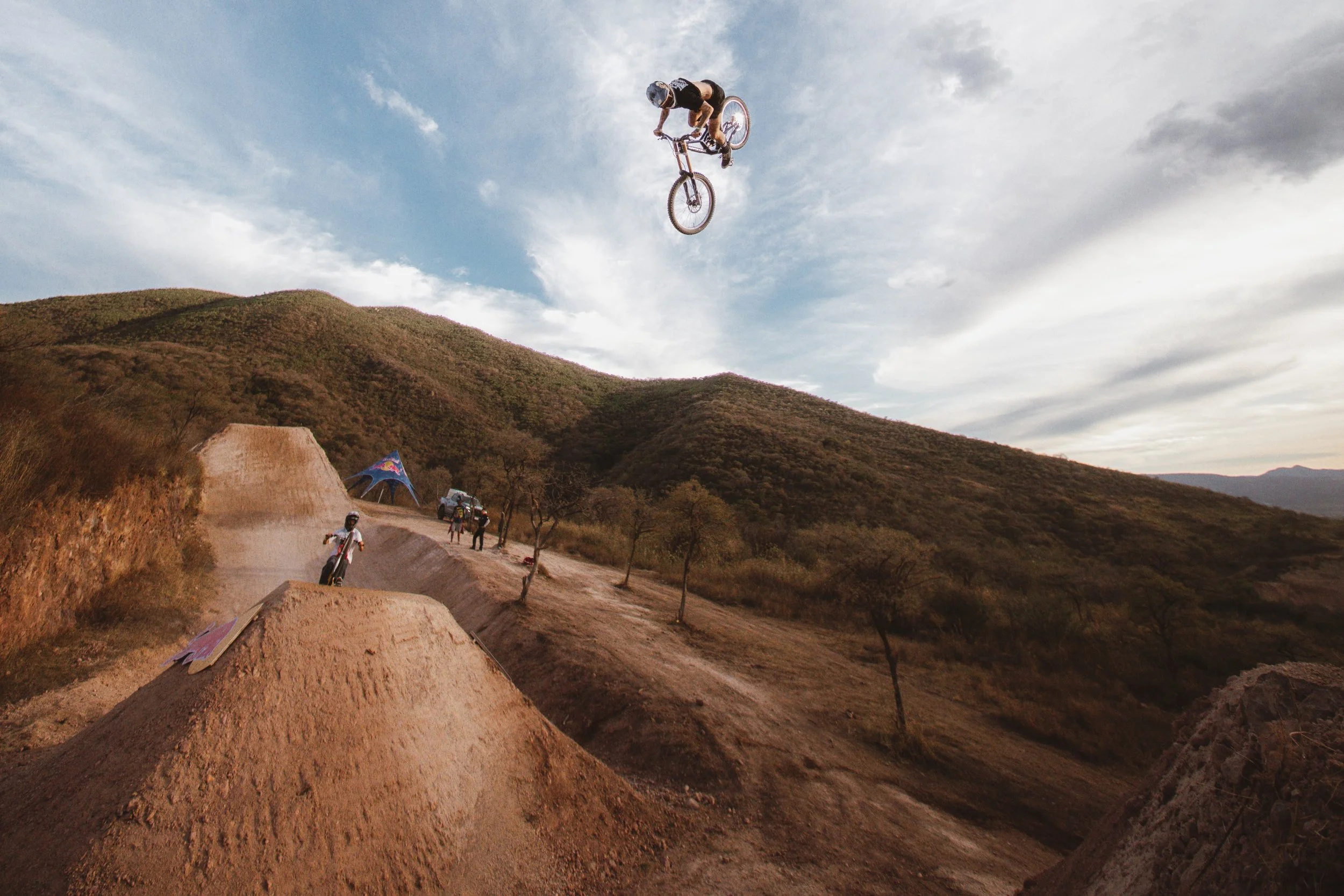
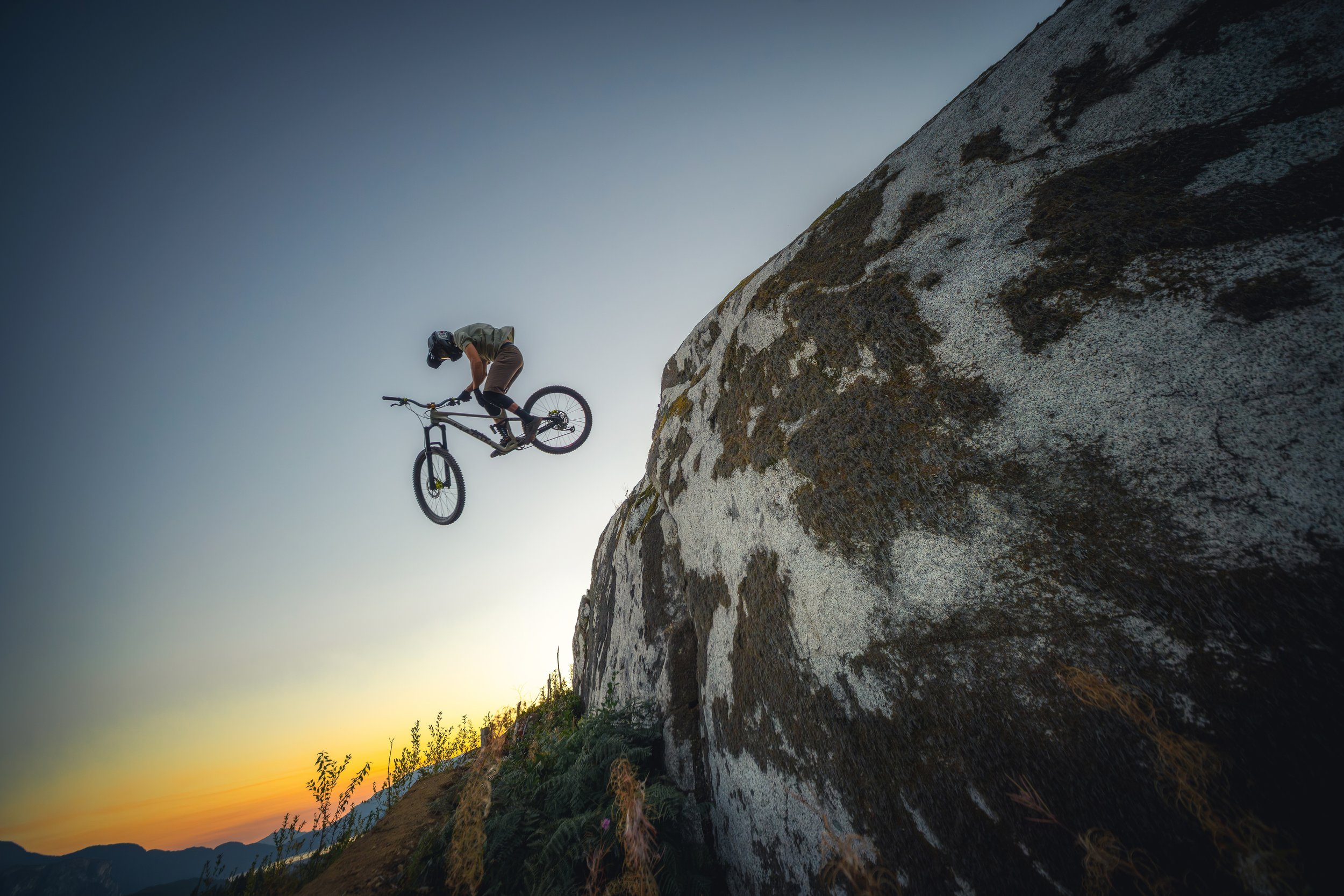
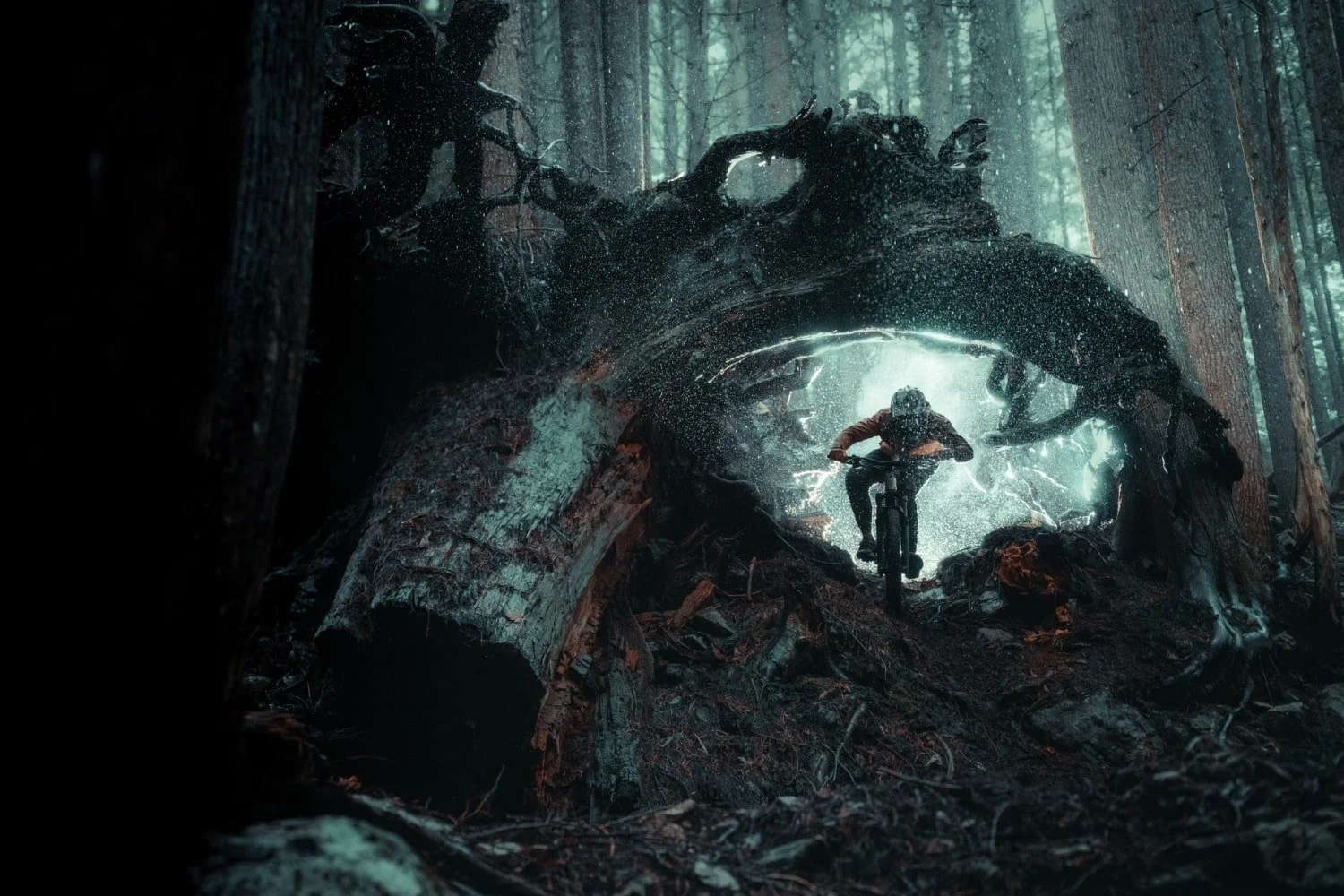
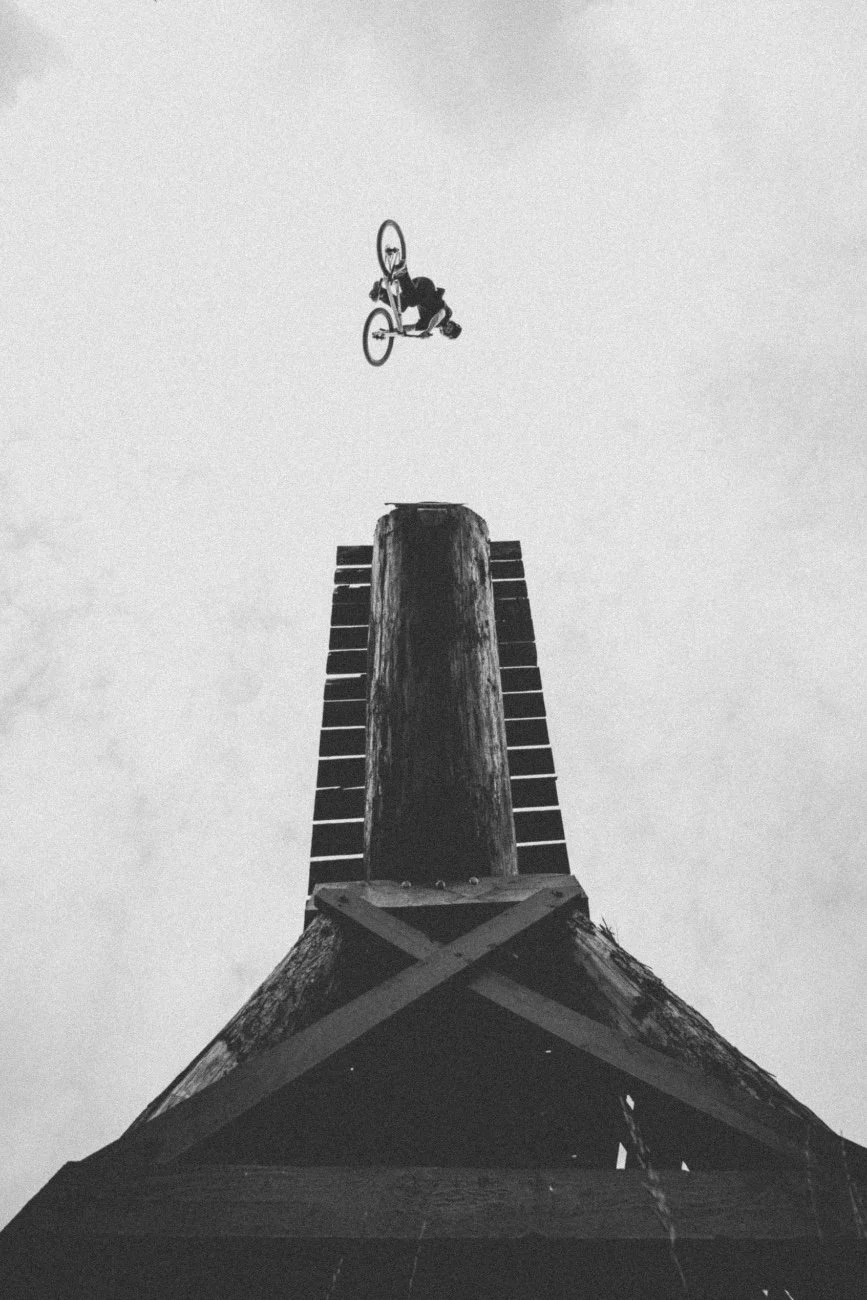
Above: a wide range of shots utilizing different shutter speeds, flash freezes and under different lighting conditions,
Aperture gives you creative control over depth of field. Shooting wide open at f/2.8 isolates your rider beautifully against a blurred background, which is perfect for mid-range action and environmental portraits. Stopping down to f/5.6 or f/8 gives a more forgiving focal plane when subjects are moving toward you at speed. When using flash, aperture also controls how much ambient light bleeds into the frame, giving you a lot of creative flexibility over the overall mood of the image.
ISO is the variable you manage around everything else. Modern cameras like the Sony A7IV handle high ISO remarkably well. I've shot clean images at ISO 6400 under stadium lights and deep in the trees. Don't be afraid to push it. A sharp, slightly noisy image beats a blurry clean one every time. When shooting with flash, you can often keep ISO lower since the strobe is providing the key light, which helps with image quality in tricky conditions.
One setting that gets overlooked: spot metering. In action sports you're often dealing with a dark subject against a bright sky, or a bright jersey in deep shade. Spot metering locks your exposure to your focus point rather than the average of the frame, and it makes a real difference in nailing exposure on your subject.
Gear: What You Actually Need vs. What's Nice to Have
You don't need the most expensive kit. You need the right kit for your sport and your budget.
For a main body, I shoot the Sony A7IV, a full-frame mirrorless with excellent autofocus tracking, burst shooting, and high ISO performance. Any modern mirrorless from Sony, Canon, or Nikon with continuous subject tracking will serve you well. Look for at least 8-10fps burst rate, reliable subject-detection autofocus, and solid high ISO performance.
Lenses matter more than most people realize:
Telephoto zoom (150-600mm or 100-400mm): My most-used lens at big events. The reach lets you shoot from the sidelines or the base of a mountain and still get tight, impactful frames. I use the Sigma 150-600mm. It's heavier, but the range is unmatched.
Mid-range zoom (35-150mm or 70-200mm): The workhorse for situations where you can get close. My Tamron 35-150mm f/2-2.8 rarely leaves my bag at trail days and local events.
Wide angle (17-28mm): Nothing conveys scale and raw energy quite like a wide angle from an intimate position. Getting underneath a jump or right beside a berm with a 17mm completely changes how people experience the image.
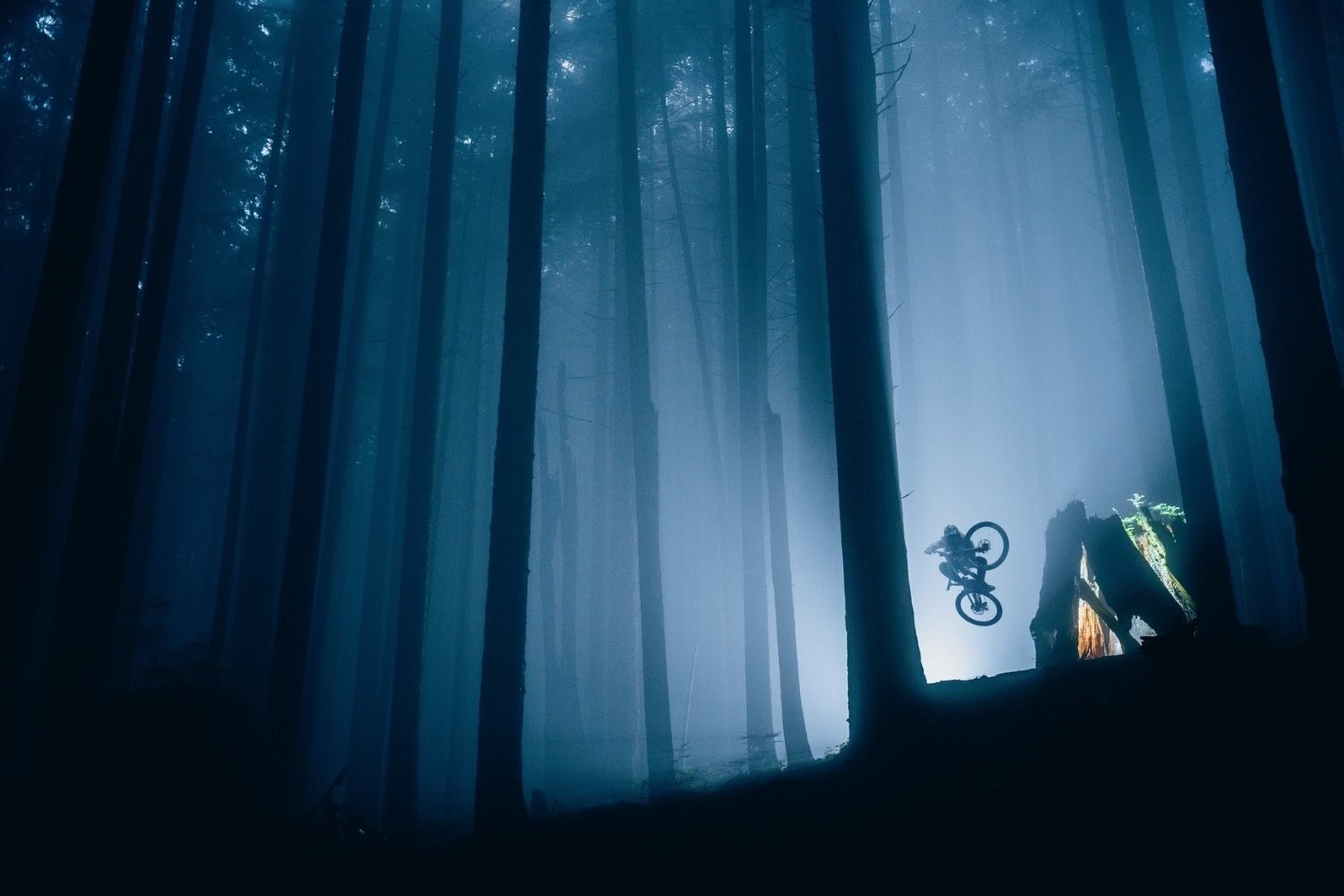
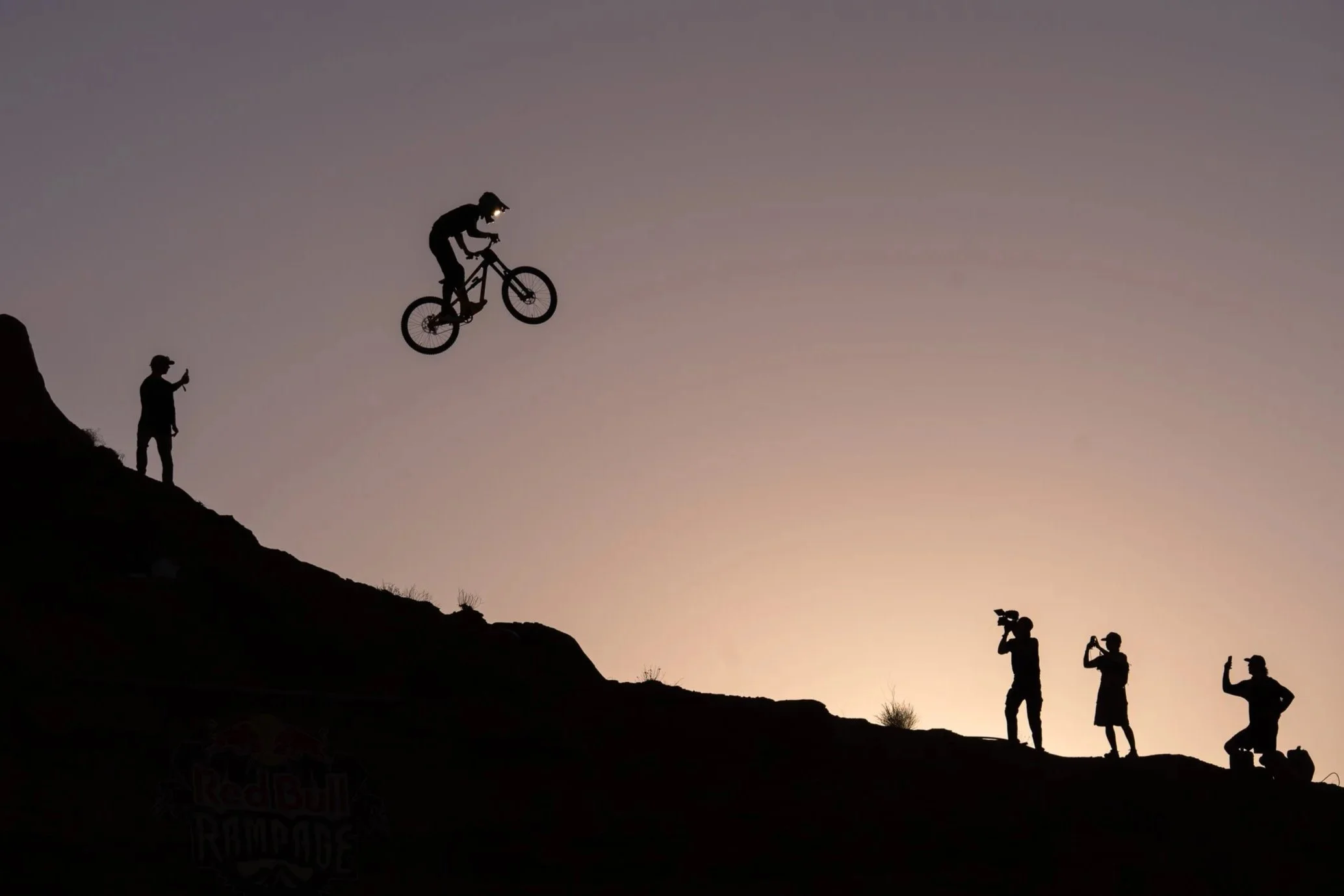
Above: A few great examples of wide, mid and long range shots being used for the same action sports discipline.
Technique: The Difference Between Good and Great
Anticipation beats reaction, every time. The photographers getting consistently great shots aren't reacting to what the rider just did. They're positioned and focused on where the rider is about to be. That comes from understanding your sport. Know the terrain, know the features, know where the decisive moment lives before it arrives.
Getting low is the single biggest upgrade most photographers can make. Shooting from knee or ground level looking up at a rider transforms an ordinary shot into something that feels massive. Some of my favourite images were shot flat on my stomach at the base of a jump. Combine a low angle with a wide lens and you get images that look like nothing else.
Background awareness is something even experienced shooters underestimate. A clean background, whether that's a wall of trees, an open sky, or a hillside, makes your subject pop. A cluttered one fights the eye. Before you set up a shot, look past your subject. If the background isn't working, move until it does.
Authenticity: The Thing That Actually Makes Images Travel
Action sports communities are deeply perceptive. Mountain bikers, skaters, surfers, snowboarders, they can tell immediately whether an image was made by someone inside the culture or someone who showed up with a long lens and no context. The images that spread are the ones that feel real. Raw moments. Genuine emotion. The subtle body language of a rider who's fully committed to something terrifying.
Being a rider yourself is a genuine advantage. When you understand what a particular feature demands, you know which moment matters. You know when someone is pushing their limits and when they're just warming up, and that understanding translates directly into more meaningful images.
Don't overlook the in-between moments either. The pre-drop ritual, the post-run buzz, the focused conversation between athletes. Sport is about performance, but sports photography is about people. The strongest bodies of work mix peak action with genuine human moments.
The margin between a great shot and a missed one is measured in fractions of a second. That's what makes action sports photography hard, and exactly what makes it worth pursuing. Get the settings dialled, know your sport, and keep showing up. When it all comes together in a single frame, there's nothing quite like it.
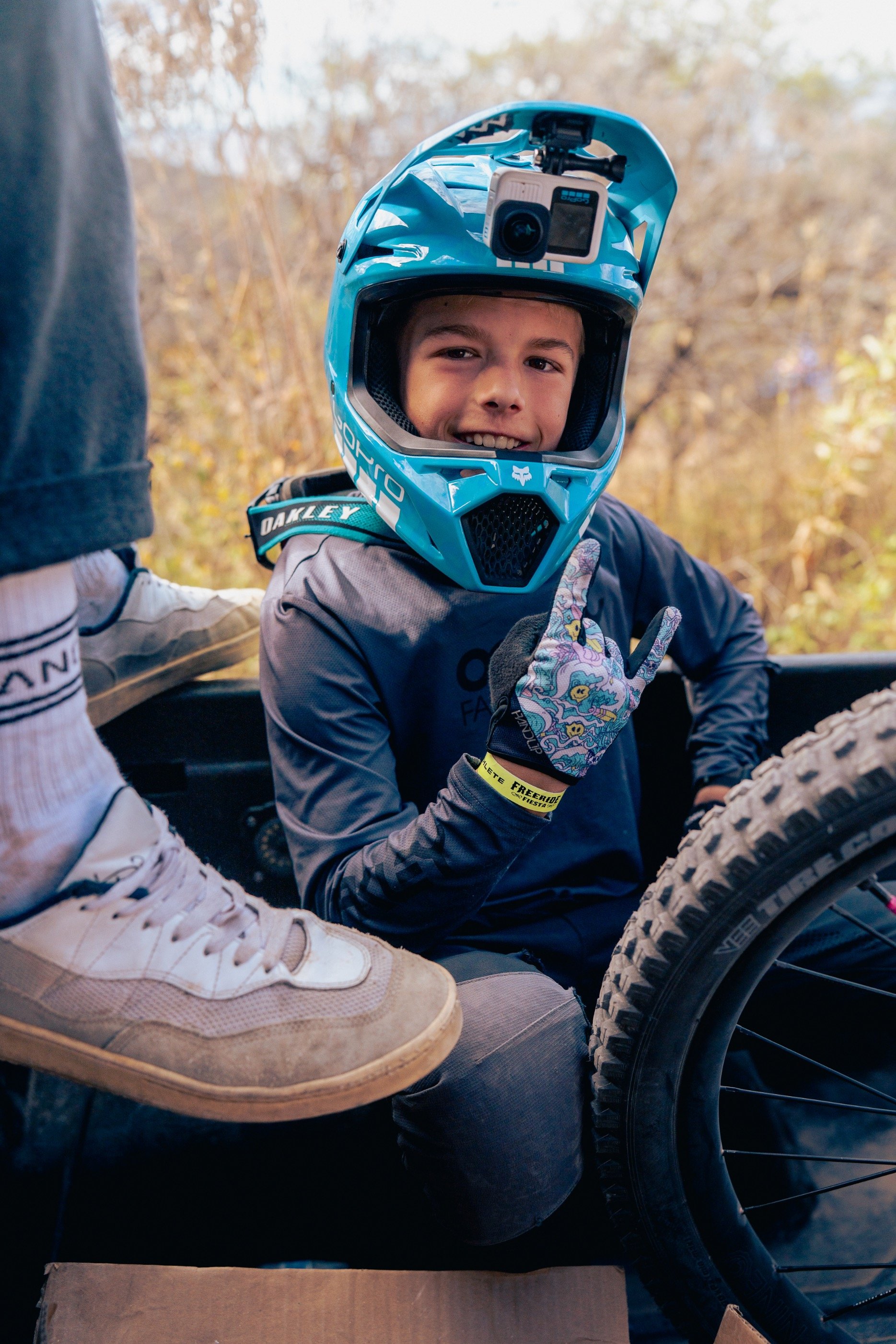
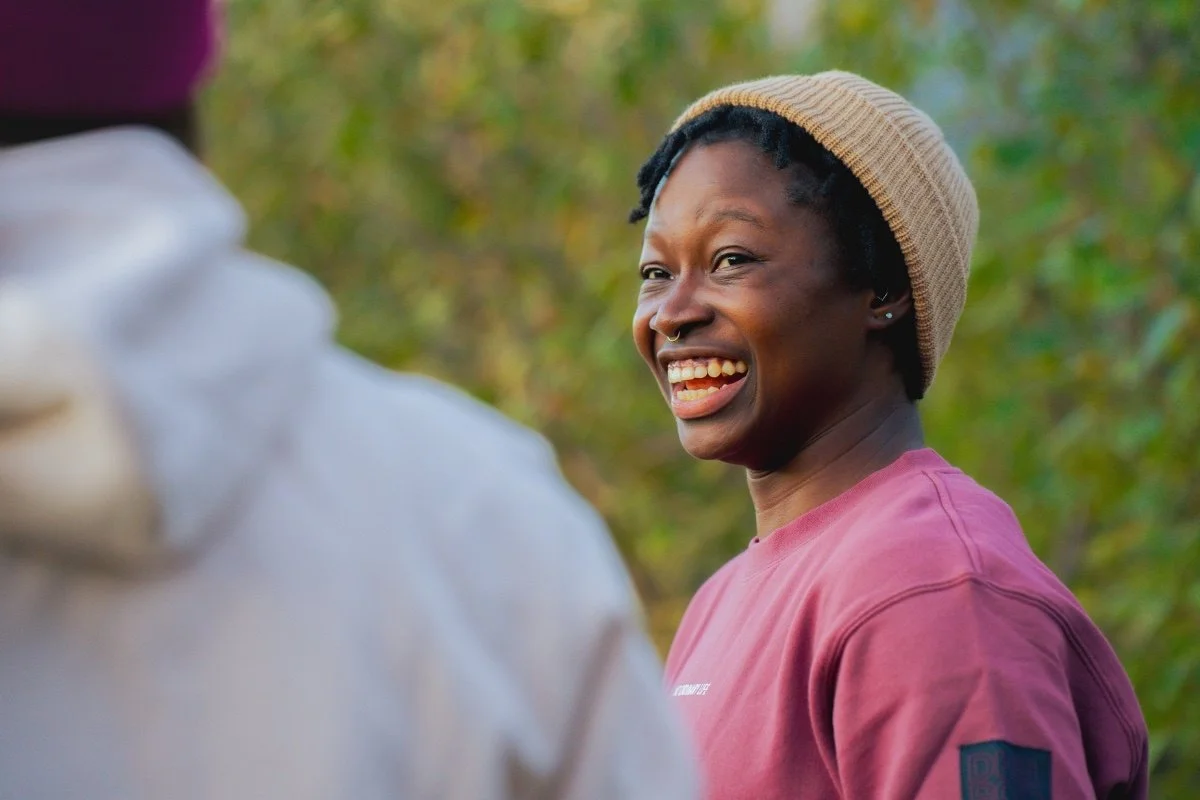
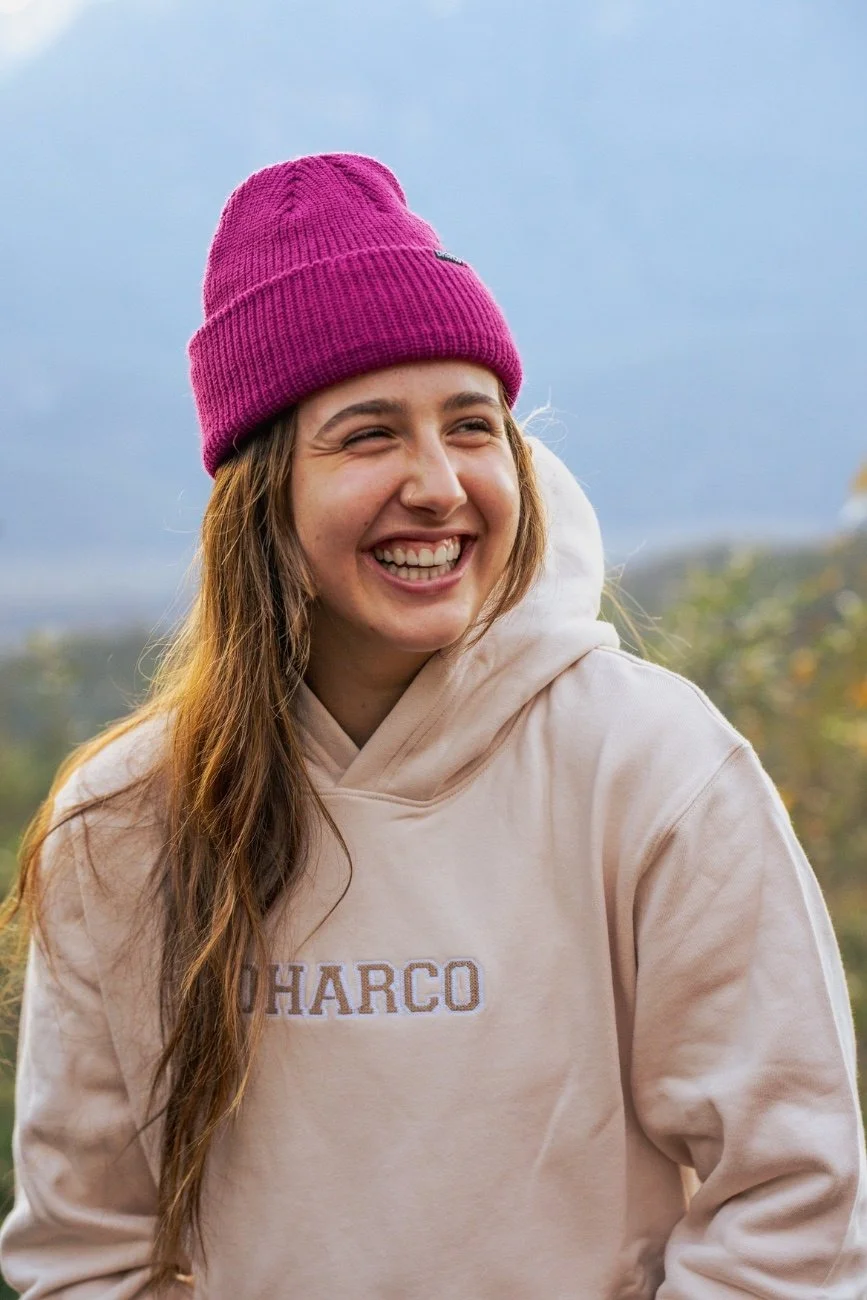
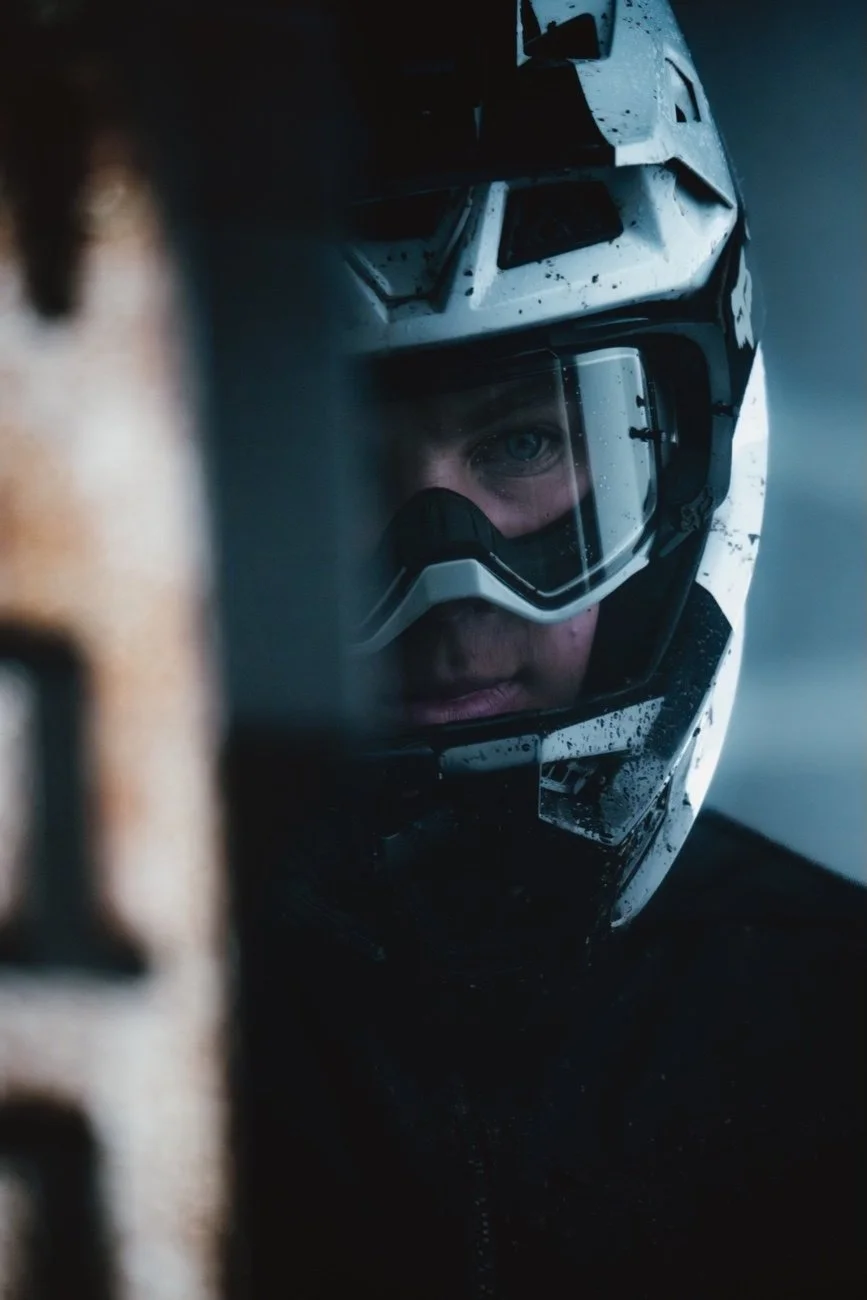
Above: Don’t forget to capture the intimate moments, the people, the real experiences. Authenticity and the human connection is the real star behind quality work
Joe Wakefield is a sports photographer based in Squamish, BC, specialising in mountain bike and action sports photography. jbwphotos.ca